What Is Event Trading? Platforms, Markets, and How It Works
Event trading is the practice of taking positions on the outcome of future real-world events through contracts whose value changes as expectations shift over time.…

That is why event trading has attracted growing attention in recent years. It offers a way to express views on elections, inflation data, interest-rate decisions, weather outcomes, sports results, entertainment milestones, and many other measurable developments.
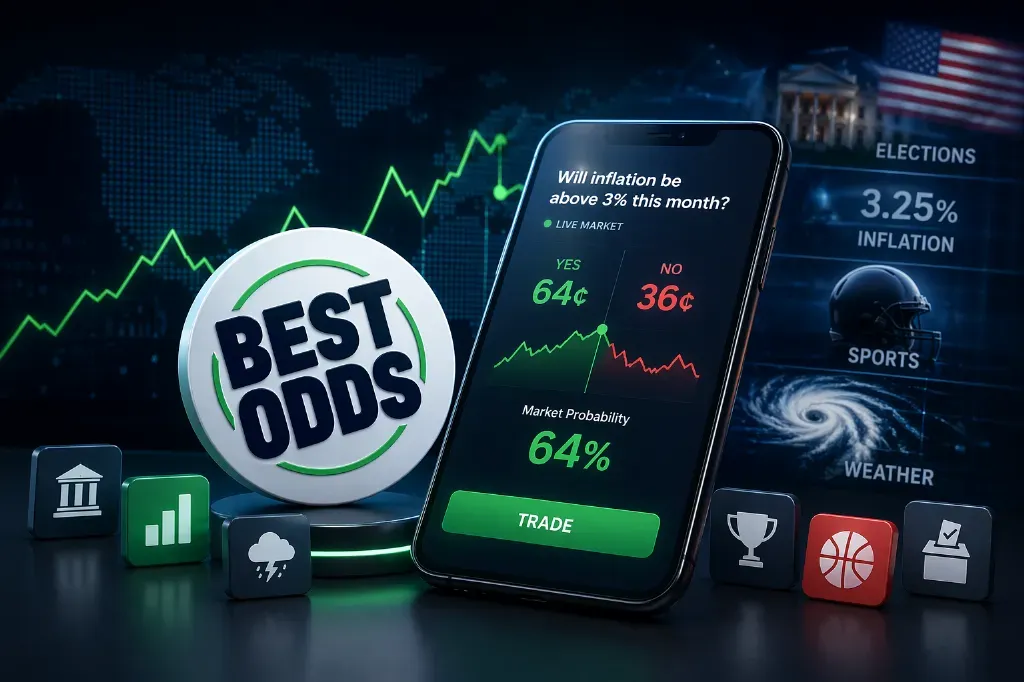
At its core, event trading transforms uncertainty into a price.
If a contract tied to a future event trades at 64¢, the market may be implying roughly a 64% probability that the event occurs, subject to liquidity, fees, and pricing conditions. If new information appears, such as fresh polling data, economic releases, injury news, or breaking headlines, that price may rise or fall accordingly.
This creates a category that blends elements of trading, forecasting, speculation, and information analysis. Some users participate because they believe markets can aggregate information better than commentators or polls. Others are interested primarily in price movement and short-term opportunities.
Unlike traditional investing, event trading usually focuses on shorter-duration contracts rather than long-term ownership of productive assets. Unlike conventional sportsbooks, pricing may be participant-driven rather than solely operator-set.
This guide explains what event trading is, how it works, how it compares with betting and prediction markets, what risks exist, and what users should know before participating.
What Is Event Trading in Simple Terms?
In simple terms, event trading means buying or selling a contract tied to a future outcome.
That outcome might be political, economic, environmental, sporting, or cultural. The contract is usually written around a specific question with a clear deadline and a clear resolution method.
Examples include:
- Will inflation come in above a certain percentage this month?
- Will Candidate A win the election?
- Will the Federal Reserve cut rates at the next meeting?
- Will a named storm make landfall in a region?
- Will a team win a championship?
- Will a product launch happen before a deadline?
If the stated event occurs according to the platform’s rules, the contract settles one way. If it does not occur, it settles another way.
The participant is not buying the event itself. They are buying or selling a probability-linked contract.
This distinction matters because the core skill in event trading is usually not “picking winners” in the emotional sense. It is estimating whether the market price correctly reflects the true likelihood of the event.
A user who believes a contract priced at 35¢ should really be closer to 50¢ may choose to buy. A user who believes a contract priced at 80¢ is too optimistic may avoid it or take the opposite side if the platform allows.
That makes event trading closer to probability judgment than conventional investing.
Why Event Trading Has Grown So Quickly
Event trading has expanded because modern users increasingly want real-time ways to engage with major events rather than passively consume headlines.
Traditional news tells users what happened. Polling attempts to estimate sentiment. Commentary gives opinions. Event markets offer something different: a live price that reflects how participants collectively interpret available information.
This can be appealing during elections, central bank meetings, earnings seasons, sports playoffs, or major geopolitical moments.
Another reason for growth is accessibility. Digital platforms and mobile apps have made it easier for ordinary users to access contracts that once would have been niche or institutional products.
There is also a psychological reason. Many people enjoy testing their judgment. Event trading gives users a structured way to express views on whether they believe consensus expectations are too high, too low, or changing too slowly.
For some, it is entertainment. For others, analysis. For many, it is both.
Best Event Trading Platforms in the U.S. – September 2026
The platforms below are commonly discussed in the event trading space and represent different market structures, access models, and user experiences. Availability depends on jurisdiction and platform rules.
1. Kalshi – Best Known U.S. Event Trading Exchange






Kalshi is one of the most recognized names in regulated U.S. event trading.
It focuses on clearly defined contracts tied to inflation, rates, weather, politics, economics, and other measurable outcomes. Markets are generally structured with formal resolution criteria linked to official sources.
That clarity has made Kalshi a leading reference point for users researching legal event trading.
Why it stands out: Strong brand recognition and structured event contract model.

2. Robinhood – Best Mainstream Retail Entry Point
Robinhood has helped expose mainstream users to event-style contracts through a familiar brokerage environment.
Rather than needing to join a niche platform, some users encounter event trading inside a broader investing ecosystem.
This mainstream wrapper can lower friction for beginners, though product scope may vary.
Why it stands out: Familiar interface and wider retail audience.

3. PredictIt – Best Known Political Event Market Brand
PredictIt became widely known through politics-focused event markets, particularly during election cycles.
It introduced many users to the concept of trading event probabilities rather than simply following polls or commentary.
Why it stands out: Historic visibility in political event markets.
4. Fanatics Markets – Best Emerging Consumer Brand
Fanatics Markets represents an effort to bring event-style markets closer to mainstream sports audiences.
Its relevance lies in consumer familiarity and the possibility of broader adoption if event trading becomes more normalized.
Why it stands out: Potential bridge between sports fans and event markets.

5. Polymarket – Best Known Crypto Event Trading Brand

 Deposit $10 get a $50 Trading BonusCLAIM BONUS


Polymarket is among the most visible crypto-native event market brands.
It often lists politics, crypto, and cultural topics with rapid reactions to breaking news.
Users should distinguish visibility from regulatory clarity, especially in U.S. contexts.
Why it stands out: Broad topic coverage and strong online mindshare.

How Event Trading Works
Most event trading revolves around contracts tied to yes/no outcomes or clearly defined thresholds.
A simple yes/no contract may ask whether a candidate wins an election, whether inflation exceeds a level, or whether a sports team reaches a final.
If the contract trades at 42¢, the market may be implying a roughly 42% chance of the event occurring. If new information increases confidence, the price may rise to 55¢ or 60¢. If confidence falls, the price may decline.
This means users can potentially profit not only by being right about the final outcome, but also by being right earlier than the broader market.
For example:
- A trader who buys at 42¢ and later sells at 58¢ may benefit even before final resolution.
- A trader who waits until the market fully agrees may miss the opportunity.
Prices move because expectations move.
Examples include:
- Strong economic data moving interest-rate contracts
- Poll shifts moving election contracts
- Weather forecasts moving storm contracts
- Injury news moving sports-related markets
- Product leaks moving launch contracts
In this sense, event trading is often less about certainty and more about speed and probability interpretation.
Why Users Trade Events
People enter event markets for very different reasons, and understanding those motives helps explain why prices move so quickly around major news.
Information View
Some participants use event markets primarily as information tools. They may have no strong interest in speculation itself. Instead, they want to see how a live market is pricing the likelihood of an outcome.
For example, a journalist might look at election contracts to gauge changing expectations. A business owner may watch interest-rate markets. A sports fan may track championship probabilities.
These users see markets as real-time probability dashboards.
Speculative View
Others participate because they believe prices are wrong.
They may think the market is underestimating a candidate, overestimating a recession risk, or reacting emotionally to a headline. Their goal is to buy undervalued probabilities or sell overpriced ones.
This group tends to focus heavily on timing, price discipline, and market psychology.
Hedging View
Some users trade events to offset other risks in their lives.
A company sensitive to bad weather may monitor storm-related markets. Someone whose portfolio depends on rates may look at central bank contracts. A politically exposed business may watch election outcomes.
This approach treats event contracts as a risk-management tool rather than entertainment.
Recreational View
Finally, some users simply enjoy participating.
They follow politics, sports, or economics closely and like expressing views through prices rather than arguments on social media. For them, event trading can be an engaging way to interact with subjects they already care about.
Event Trading vs Prediction Markets
The terms event trading and prediction markets are often used interchangeably, and there is genuine overlap between them. Both generally involve contracts tied to future outcomes whose prices move as expectations change.
However, the emphasis is often different.
Prediction markets usually describe the broader concept of information markets where prices aggregate collective beliefs. The intellectual focus is often on forecasting accuracy and whether markets outperform polls, experts, or commentators.
Event trading places more emphasis on user behavior inside the market. It focuses on entering positions, managing exposure, reacting to price changes, and potentially exiting before settlement.
In simple terms:
- Prediction markets emphasize the forecast signal
- Event trading emphasizes the trading opportunity
The same platform can therefore be described in both ways depending on who is speaking.
An academic researcher may call it a prediction market. A retail participant may call it event trading. A journalist may use either term.
Event Trading vs Sports Betting
This comparison matters because many first-time users immediately assume event trading is simply betting with different branding.
There are similarities. Both involve future outcomes, changing expectations, and risk.
But there are also important differences.
Price Formation
Traditional sportsbooks usually publish odds set by the operator. Those odds include margin and risk management considerations.
In event trading, prices may instead emerge through participant interaction. Buyers and sellers collectively influence pricing.
Position Management
In a sportsbook, users often hold a ticket until the final result unless a cash-out feature is offered.
In event markets, users may be able to buy and later sell before the event ends if liquidity exists. This creates more active position management.
Market Scope
Sportsbooks focus mainly on sporting outcomes.
Event markets may include:
- Elections
- Inflation
- Interest rates
- Weather
- Politics
- Technology milestones
- Entertainment awards
- Sports outcomes
Mindset
Sports bettors often think in terms of winners and losers.
Event traders often think in terms of whether the probability price is efficient.
That shift in mindset is significant.
Is Event Trading Legal?
Legality depends on jurisdiction, platform structure, contract type, and user eligibility.
There is no single global answer.
Some event trading platforms operate under clearer regulatory or licensed frameworks. Others rely on offshore or crypto-native models that may involve more uncertainty.
In the United States, some products may be treated more like event contracts or exchange-style instruments than conventional gambling products. Others may face restrictions depending on evolving legal interpretation.
That means the smart question is not:
It is:
“Is this specific platform and this specific product legal and available for me where I live right now?”
Users should always check:
- Supported states or countries
- Identity verification requirements
- Age limits
- Funding restrictions
- Current platform terms
- Whether specific markets are available locally
Legal access can also change over time. Users should never assume availability remains static.
Risks of Event Trading
Event trading can look deceptively simple because many contracts are yes/no markets. In reality, several risks exist.
Probability Risk
A contract priced at 75¢ still fails one time in four if the pricing is accurate. Many beginners confuse high probability with certainty.
Liquidity Risk
Thin markets can move sharply on small orders. Users may struggle to enter or exit at fair prices.
Information Risk
Headlines can be wrong, delayed, misleading, or overhyped. Acting too quickly on poor information can be costly.
Resolution Risk
Users should understand exactly how outcomes are determined. A market can settle based on official sources that differ from media assumptions.
Emotional Risk
Politics, sports, and macroeconomic topics trigger bias. Many users trade what they want to happen rather than what is likely.
Overtrading Risk
Because events happen constantly, users can fall into endless reactive trading without real edge.
Discipline matters more than excitement.
How to Evaluate an Event Trading Platform
Not all event trading platforms offer the same experience. Two sites may both list markets on politics, sports, or economics, yet differ substantially in reliability, usability, and market quality.
Choosing a platform should involve more than checking which site has the most headlines or the loudest online buzz.
Contract Clarity
The first thing users should examine is how clearly markets are written.
A strong platform uses precise wording, clear deadlines, and transparent settlement criteria. Users should know exactly what must happen for a contract to resolve “Yes” or “No.”
Vague wording creates avoidable disputes and confusion. If a contract can be interpreted in multiple ways, risk rises immediately.
Liquidity and Pricing Efficiency
Liquidity refers to how easily users can enter or exit positions without causing dramatic price movement.
In active markets with deeper participation, prices may move more smoothly and spreads can be tighter. In thin markets, even modest trades can move prices sharply.
For many users, good liquidity is more valuable than a flashy topic list.
Trust and Reputation
Users should consider whether the platform has a credible operational history.
Important questions include:
- Does it communicate clearly?
- Does it publish rules transparently?
- Does it handle settlement professionally?
- Does it maintain stable access and functionality?
Trust is difficult to measure until something goes wrong. That is why it matters beforehand.
User Experience
A good interface should make it easy to:
- Browse markets
- Understand pricing
- Track open positions
- Review history
- Manage balances
- Access support or documentation
Confusing design can create mistakes even if the underlying markets are sound.
Market Breadth
Some users prefer deep focus in one category such as politics or macroeconomics. Others want variety.
Neither model is automatically better. What matters is whether the platform covers markets the user can actually analyze.
Regulatory Posture
Where relevant, users often prefer platforms operating under clearer legal or licensed structures rather than vague alternatives.
That does not guarantee success, but it can reduce certain categories of uncertainty.
Beginner Strategy for Event Trading
New users often assume success comes from predicting everything. In practice, discipline and selectivity matter more.
Start Small
Many beginners overcommit emotionally or financially too early.
A better approach is to begin with small positions or even observation-only tracking. Learn how prices move before trying to “beat” the market aggressively.
Focus on Familiar Domains
Users generally perform better in subjects they genuinely understand.
Someone who follows central banks closely may have better instincts in rate markets than in sports contracts. A sports analyst may understand injuries and scheduling dynamics better than election polling.
Do not confuse curiosity with expertise.
Respect Probabilities
Even well-priced contracts lose regularly.
A contract trading at 80¢ can still fail. A contract trading at 20¢ can still win. Users who emotionally attach to favorite outcomes often struggle.
Avoid Constant Trading
Not every headline creates opportunity.
Many users lose edge by reacting to every small move. Sometimes the best decision is doing nothing.
Learn from Process, Not Just Results
Winning once on a bad process can create false confidence. Losing once on a sound process can still be a good decision.
Track whether your reasoning was solid, not only whether the final outcome happened to go your way.
Common Mistakes New Users Make
Confusing Opinion with Edge
Having a strong political or sports opinion does not automatically mean the market is mispriced.
Many markets already reflect public information quickly.
Chasing Headlines Late
By the time a dramatic headline reaches mainstream attention, prices may have already adjusted.
Late emotional entries are common beginner errors.
Ignoring Settlement Rules
Some users assume a contract resolves based on common sense rather than formal criteria. That can be costly.
Always read the rules.
Overconcentration
Putting too much exposure into one emotional event can distort judgment and risk management.
Treating Markets as Certainty Machines
Markets are useful signals, but they are not omniscient. Prices can be wrong, thin, emotional, or temporarily distorted.
Responsible Use in Event Trading
Event markets can be intellectually engaging, but they still involve risk and uncertainty.
Users benefit from setting clear limits before participating. Decide how much capital, time, and emotional energy you are willing to allocate.
Avoid revenge trading after losses or doubling down purely to “be right.” That behavior is common in all speculative markets and often damaging.
Take breaks during emotionally charged news cycles. Constant exposure to politics, economic anxiety, or sports drama can reduce judgment quality.
Most importantly, keep perspective.
No single market, election, sports result, or economic release defines long-term success.
Frequently Asked Questions
What is event trading?
Event trading means taking positions on contracts tied to future real-world outcomes such as elections, inflation, weather, sports, or policy decisions.
Is event trading the same as prediction markets?
They overlap heavily. Prediction markets usually emphasizes forecasting value, while event trading emphasizes participation and trading activity.
Is event trading the same as betting?
Not always. Some platforms use participant-driven pricing or exchange-style structures rather than operator-set odds.
Can users exit before the final outcome?
On some platforms, yes. If liquidity exists, positions may be closed before settlement.
Is event trading risky?
Yes. Outcomes remain uncertain, prices can be wrong, and emotional bias can hurt decision-making.
What is the most important beginner skill?
Usually probability thinking, patience, and risk control.
Now an experienced iGaming and sports betting writer and editor, Alex has been a keen casino player and sports bettor for many years, having dabbled in both for personal entertainment. He regularly plays slots, and places bets on his favourite sports, including football and NFL as a preference; he’s a big fan of Chelsea and the New York Giants for all his sins.