





 Trade $25 Get $55CLAIM BONUS





Kalshi Review
Safety Rating (SR)
by BestOdds.com90%
User Rating
User ReviewsPayment Methods
Checklist
Overview
Kalshi’s 2026 World Cup Prize Pool
Bonuses
Trade $25 Get $55CLAIM BONUS
Pros & Cons

Kalshi is one of the most important “new” consumer financial products of the past few years because it packages something historically reserved for institutions and niche communities – event-driven derivatives – into a simple, app-like experience. If you’ve ever said “I think inflation will come in hot,” “I think this team will win,” or “I think the Fed will cut sooner than the market expects,” Kalshi is built to let you express that view as a tradeable position rather than as a traditional bet. That distinction is not cosmetic. It changes how prices form, how you win or lose, and what kinds of users the platform is designed for.
This review is written as a true “ultimate guide.” It is meant to replace the need to bounce between explainers, legal summaries, fee pages, and scattered opinions. If you are new to prediction markets, you’ll learn the core concepts without being talked down to. If you are already fluent in trading, you’ll get the operational details that actually matter: contract structure, settlement logic, liquidity dynamics, and the practical meaning of Kalshi’s regulatory status—especially in categories like sports where the platform has drawn intense scrutiny.
Most importantly: Kalshi should not be evaluated like a casino, a sportsbook, or a sweepstakes platform. It is closer to an exchange. That means the right questions are different. Instead of “What’s the welcome bonus?” you should ask “What are the fees and spreads?” Instead of “Is it fun?” you should ask “Is the market liquid enough for my position size and exit plan?” Instead of “Can I bet from my state?” you should ask “What is the current availability of this category in my jurisdiction—and how quickly can it change?” If you approach Kalshi with the correct mental model, the platform makes a lot more sense—and the user experience becomes far less confusing.

Kalshi’s 2026 World Cup Prize Pool
Alongside its standard sports event contracts, Kalshi has run a dedicated 2026 FIFA World Cup promotion at kalshi.com/soccer-cup, built around the tournament rather than any single match. The structure reflects the platform’s market-first identity: rather than a conventional sportsbook bonus, it is framed as a prediction pool tied to a single, objectively resolvable outcome – the eventual World Cup winner. Use this link to claim $10 on Kalshi.
The promotion has two components. Every user who correctly predicts the winning country shares in a prize pool of up to one million dollars, split across all correct entries. Separately, every qualifying entrant is placed into a draw for two tickets to the World Cup. The correct-country pool rewards accuracy, while the ticket draw is a flat entry mechanic, so a participant can land in one, both, or neither depending on the result and the draw.
Eligibility and Entry Requirements
Because the promotion runs on Kalshi’s regulated exchange rather than a gambling platform, the qualification rules mirror the platform’s standard compliance posture rather than a sportsbook’s. To take part, a user must:
- be at least 18 years old,
- hold a Kalshi account with identity verification (KYC) completed,
- be located in the United States,
- and reside outside New York and Florida, which are excluded from the promotion.
The New York and Florida exclusions are consistent with the jurisdictional friction discussed throughout this review: sports-related contracts are the category most subject to state-level variation, and a user’s eligibility for any given Kalshi market – promotional or otherwise – can depend on their state of residence. The verification requirement is also not incidental. Because entry is tied to a KYC’d account, completing verification early is the practical prerequisite for participating in time-sensitive offers like this one, rather than something to be left until the moment a market or promotion is live.
Timing and Settlement
Entry to the prize pool opened ahead of the tournament and closed at the start of the first World Cup match on June 11, 2026, when the group stage began. This closing mechanic is in keeping with how prediction markets handle pre-event contracts: once the underlying event is in motion, the entry window resolves and pricing – or in this case, qualification – locks. Users who entered before kickoff remain in the pool; the window does not reopen mid-tournament.
Settlement follows the tournament itself. The prize pool is announced once the World Cup final is resolved, with any winnings deposited directly into qualifying users’ Kalshi accounts. This is consistent with the platform’s broader settlement logic described earlier in this review: the outcome is determined strictly by the official result, and the payout is credited to the account rather than paid through a separate promotional channel. For entrants, that means the relevant date is the final on July 19, 2026, after which correct-country payouts and the ticket draw are confirmed and distributed.
As with any Kalshi activity, the promotion should be approached on the platform’s own terms. It is a structured, rules-based offer tied to a defined outcome and an official settlement source, not an open-ended entertainment incentive. Full terms, eligibility confirmation, and current status are available at kalshi.com/soccer-cup.
What Is Kalshi?
Kalshi is a US-based platform where users trade event contracts tied to real-world outcomes. You are not placing a bet against a house. You are buying and selling contracts in a marketplace where the price moves as the crowd collectively re-prices the likelihood of an outcome. The simplest way to understand it is: Kalshi turns questions about the future into instruments with a tradable price.
Each contract is defined by (1) a clear question, (2) an explicit set of resolution rules, and (3) a settlement value at expiration. If the event resolves one way, one side of the contract pays out; if it resolves the other way, the opposite side pays out. Before settlement, you can often exit early, reduce exposure, or take profit by selling your position back into the market—assuming there is sufficient liquidity. This “tradeability” is one of Kalshi’s most important differences versus traditional wagering formats.
Kalshi’s categories typically include politics, economics, culture/public events, and sports event contracts (availability may vary). Regardless of category, the structure is consistent: a contract price is a market-implied probability – not a bookmaker’s odds. That means you should think less in terms of “I’m betting on X” and more in terms of “I’m buying probability at price Y.”
In practice, Kalshi attracts a mix of users. Some are casual participants drawn by big events. Others are more analytical—people who enjoy forecasting, probabilities, and market logic. There is also a segment of users who treat it as a lightweight way to express macro views without trading traditional instruments. But across all user types, the same principle applies: Kalshi rewards those who understand that how you enter and what price you pay often matters just as much as the final outcome.
Kalshi’s Regulatory Status (Why It Matters More Than Anything Else)
Kalshi operates as a federally regulated exchange under the oversight of the Commodity Futures Trading Commission (CFTC) and is registered as a Designated Contract Market (DCM). That classification is the same regulatory bucket used by US futures exchanges. This is not a marketing detail; it shapes the entire product. It influences what contracts can exist, what disclosures are required, how market integrity is framed, and what kinds of compliance controls users should expect.
Because of this structure, Kalshi does not present itself as a gambling operator and does not seek to behave like one. It doesn’t rely on the patchwork of state gambling licenses the way sportsbooks and casinos do. Instead, it frames event contracts as exchange-listed instruments – and argues that federal commodities oversight governs the product’s legality. This is the foundation of Kalshi’s nationwide narrative, and it’s also the reason the platform has encountered friction with some state-level regulators, particularly around sports-related contracts.
For users, “regulated exchange” carries both benefits and tradeoffs. The benefits are obvious: clearer rule frameworks, formalized settlement procedures, stronger compliance posture, and a product built to survive scrutiny. The tradeoffs are equally real: identity verification, funding constraints, a more finance-like feel, and fewer of the promotions and entertainment flourishes that gambling products use to drive engagement. If someone wants dopamine, Kalshi may feel too serious. If someone wants structure, the seriousness is the point.
There is also an important nuance: regulation does not mean “risk-free.” It does not guarantee that markets are always available in every location, especially in contested categories. And it does not protect users from making poor decisions, misunderstanding contract terms, or paying avoidable fees. What it does mean is that Kalshi is designed to operate inside a framework that expects transparency, oversight, and enforceable rules—more like finance than gaming.
How Kalshi Differs From Sportsbooks and Casinos
Many people discover Kalshi through headlines that make it sound like “sports betting, but different” or “betting on the future.” That framing is understandable, but it’s incomplete. Kalshi should be understood as a market, not a book. The platform’s behavior is shaped by matching buyers and sellers, not by Kalshi taking the other side of your position.
The first major difference is that prices are discovered, not assigned. Sportsbooks set odds; Kalshi’s contracts trade. That means the “price” you see is the result of collective flow and can move quickly with information. It also means that you may not always get filled instantly at the price you want, especially in thin markets. Liquidity and spreads matter. If you’re used to sportsbooks where your stake is accepted at the displayed odds, you’ll need to adjust your expectations.
Second, Kalshi allows you to behave like a trader. You can exit before settlement, lock in profit, cut losses, or change your mind. In sportsbook terms, this would resemble a cash-out feature—but on Kalshi it’s not a discretionary cash-out offer from a bookmaker; it’s the natural result of being able to sell back into an order book. This is a profound difference for strategy and risk control. A user who understands exits can reduce exposure dramatically compared to someone who treats every contract like a “set and forget” bet.
Third, Kalshi’s “cost” is not the hidden edge embedded in odds; it is explicit: trading fees, deposit fees by method, and potentially withdrawal fees. That makes cost more visible, but it also means active users need to think like cost managers. Small, frequent trades can bleed value if you ignore fees and spreads. A casino-style mindset—chasing small edges with lots of clicks—can turn into a slow leak on an exchange-style product.
Finally, the tone and culture differ. Casinos and sportsbooks are built around entertainment and habit loops. Kalshi is built around outcomes and rules. The interface feels more like finance. The language is more “markets” than “bets.” And the platform assumes you are capable of reading contract definitions. That’s not elitism—it’s the minimum requirement for a product where settlement depends on written terms.
The Philosophy Behind Event Contracts
At its core, Kalshi is a belief in markets as forecasting machines. The platform exists because the aggregation of many informed (and uninformed) participants often produces a probabilistic signal that is more accurate than single experts. When people trade contracts based on their information—polling data, economic indicators, injury news, legal developments—the price becomes a living estimate of likelihood.
This is why Kalshi can be valuable even for people who don’t trade. The price itself can function as a snapshot of collective belief. For example, macro markets can reflect shifting expectations ahead of economic releases; political markets can show momentum; sports markets can capture injury narratives and public sentiment. Kalshi is not the only place this happens, but it is one of the few places trying to do it under a regulated US exchange model.
The second philosophical pillar is clarity through rules. Prediction markets only work if settlement is unambiguous. Kalshi’s contract design emphasizes explicit definitions and objective sources. That can make markets feel “legalistic,” but it prevents the worst outcome for a prediction market: disputes rooted in ambiguity. When the market is written well, you don’t argue about who “should” have won; you check the rule and the source.
The third pillar is accessibility. Traditional derivatives markets can be intimidating. Kalshi attempts to make event contracts understandable to everyday users by expressing prices in intuitive terms and offering discrete yes/no questions rather than complex payoffs. But accessibility cuts both ways: it can attract users who underestimate risk, ignore fees, or trade emotionally. Kalshi’s challenge is to be welcoming without becoming a casino. The product’s long-term credibility depends on maintaining that line.
How a Kalshi Contract Works (Concrete Example)
Imagine a contract that asks: “Will inflation (CPI) come in at or above X this month?” On Kalshi, that contract trades at some price between 0 and 100. If the contract is trading at 62, the market is effectively saying: “We think there is roughly a 62% chance this happens.” If you believe the true probability is higher, you might buy. If you believe it’s lower, you might sell (or take the opposite side, depending on how the market is structured).
Here’s the key: you are not only betting on the outcome. You are betting on the relationship between your belief and the market’s price. If you buy at 62 and the market later reprices to 75 before settlement because new data emerges, you may be able to sell for profit even if the event hasn’t occurred yet. This is why Kalshi behaves more like a trading venue than a betting site. The mark-to-market change is part of the experience.
Settlement is where the contract’s seriousness shows. The market will specify the official source and the exact interpretation rules. Once the outcome is officially known, the contract resolves, and the payout is determined strictly by those terms. If you held the winning side into settlement, you receive the settlement value; if you held the losing side, it expires worthless. The simplicity of the payoff is intentional. Kalshi wants the complexity to live in probability and pricing, not in payout algebra.
In practice, the best Kalshi users behave like disciplined traders. They plan entries, plan exits, understand that the market’s price may be “wrong” for a while, and size positions so they can survive volatility. The worst Kalshi users treat it like a roulette wheel with news headlines. The platform can support either behavior—but only one behavior tends to have a good long-term outcome.

Market Categories on Kalshi
Kalshi organizes markets into real-world domains where outcomes can be clearly defined and objectively resolved. The appeal of each category depends on the user’s interests and also on liquidity. Some markets are naturally liquid because they attract broad attention; others are niche and may be harder to trade efficiently.
Politics & Policy
These markets attract users who follow elections, legislation, regulatory decisions, and high-profile political events. In political markets, information is messy, narrative-driven, and sometimes emotionally charged. That creates both opportunity and danger. Opportunity because prices can lag reality when sentiment swings; danger because traders can confuse personal desire with probabilistic truth.
Political markets also tend to be extremely sensitive to news. A single endorsement, scandal, polling shift, or court decision can move pricing dramatically. For a user, this means two things: you must accept volatility, and you must read market definitions carefully—especially around timing and certification rules.
Economics & Macroeconomics
Macro markets are often the “most finance-like” and appeal to users who like scheduled releases and measurable outcomes. Because many releases occur on a known timetable, volatility often concentrates around specific windows. This creates a more structured experience: you can plan around data calendars, assess consensus expectations, and decide whether the market price is misaligned with your own model.
But macro markets are not “easier.” They can be brutal if you misunderstand how the contract defines the outcome (for example, which revision is used, which agency source is authoritative, or what happens under special circumstances). The edge in macro is rarely “guessing” the number. It’s understanding the probability distribution and whether the market is pricing it efficiently.
Culture & Public Events
These can range from awards to other discrete public outcomes. Liquidity is the main issue here. Cultural markets can be fun and accessible, but thin markets amplify spreads and make exits less reliable. If you treat cultural markets as entertainment positions, that may be fine. If you treat them as trading vehicles, you need to be even more careful about market depth and pricing quality.
Sports Event Contracts
Sports are where Kalshi meets mainstream attention. These markets are intuitive (“Team A wins”) and naturally attract liquidity during big events. But they also sit at the center of the platform’s legal tension in the US because many states consider sports outcomes to be the domain of regulated sportsbooks.
From a user standpoint, sports contracts can be among the most attractive (because they’re easy to understand) and among the most unstable (because availability can change and legal challenges can affect the product category). If your only reason to use Kalshi is sports, you must be comfortable with the idea that this part of the platform is still evolving.
Sports on Kalshi: The Most Contested Category
Sports event contracts are the category most likely to confuse users and trigger misinformation. Product-wise, they behave like any other contract: clear terms, binary outcomes, market pricing, and settlement. The controversy is not about mechanics; it’s about classification—whether, in practice, these instruments should be treated as regulated financial contracts or as sports wagering by another name.
For users, the practical risk is not “Kalshi won’t settle correctly.” The more realistic risk is that access to certain sports markets can be restricted or changed depending on jurisdiction, enforcement posture, or legal decisions. That can create frustrating experiences for users who sign up expecting a stable sports product the way they would with a conventional sportsbook.
If you trade sports contracts on Kalshi, you should approach them with extra discipline:
- assume category availability can change,
- avoid overfunding based on one seasonal event,
- diversify into non-sports markets if you plan to keep a long-term account,
- and be aware that news in the legal/regulatory environment can matter almost as much as news about the teams.
There is also a strategic nuance: sports markets can become crowded with casual money during major events, which can create mispricing. That can be an advantage for disciplined traders who understand probability and are willing to take the other side of narratives. But crowd-driven markets can also swing irrationally, and if you are not careful with position sizing, you can be right and still lose due to timing and volatility.
Ultimately, sports on Kalshi should be treated as a powerful use case—and a moving target. The platform’s long-term relationship with sports contracts will shape public perception. But as a user today, you should focus on what you can control: understanding contract terms, managing fees, and not relying on a single category for the platform to make sense.
Account Creation and Verification
Kalshi’s onboarding is closer to a financial platform than a casino. Identity verification is not an optional feature; it is a core requirement. Users should expect to provide personal information and complete a verification flow that may include identity documents and checks. This is part compliance and part fraud prevention, but it also affects user expectations: you are not creating a “quick burner account” for casual play. You are creating a verified profile.
Verification typically influences multiple things:
- whether you can trade freely,
- whether you can withdraw,
- whether promotions (if offered) apply to you,
- and how quickly funds move through the system.
Users who resist KYC should not use Kalshi. The product does not pretend otherwise. If you are comfortable with regulated finance apps, Kalshi’s approach will feel normal. If you are coming from sweepstakes platforms or offshore sites, it will feel strict. That strictness is part of Kalshi’s identity.
Another subtle point: verification friction often happens at the worst possible time—when users are excited to act on a market. The best way to avoid frustration is to complete verification early, before you care about a specific contract. Kalshi is built for repeated use across many events; you don’t want to be stuck in onboarding when the market you want to trade is moving rapidly.
Finally, verification can intersect with withdrawal holds. Many regulated platforms implement additional checks when money flows out. This is standard. Users should not interpret it as malicious, but they should factor it into expectations—especially if they plan to trade around time-sensitive events and withdraw immediately afterward.
User Interface and Trading Experience
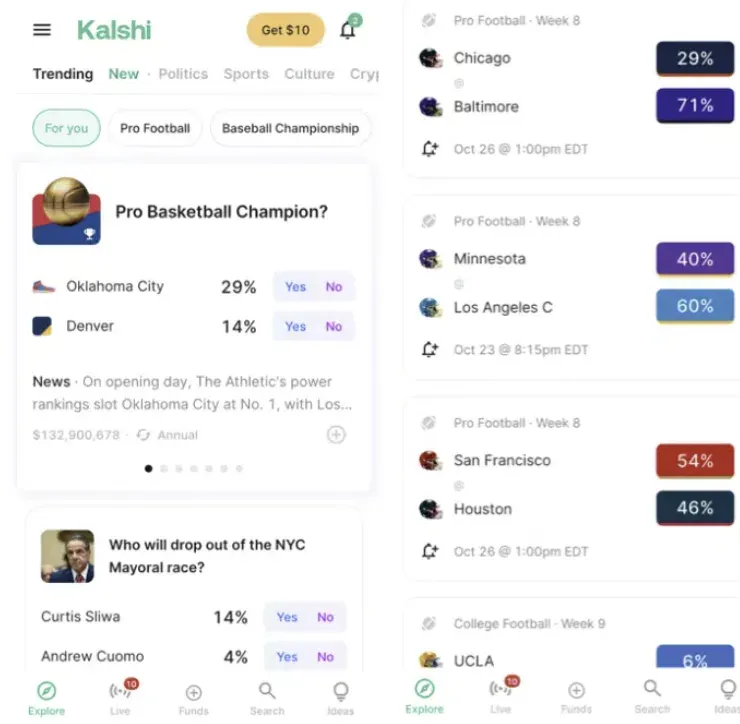
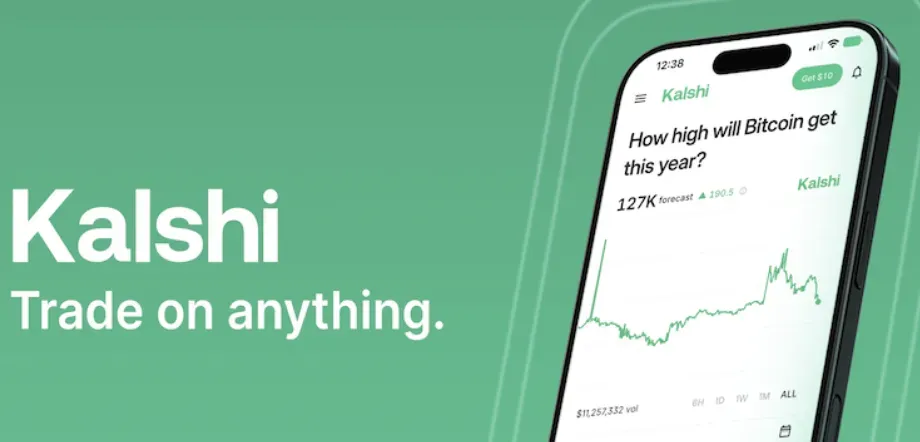
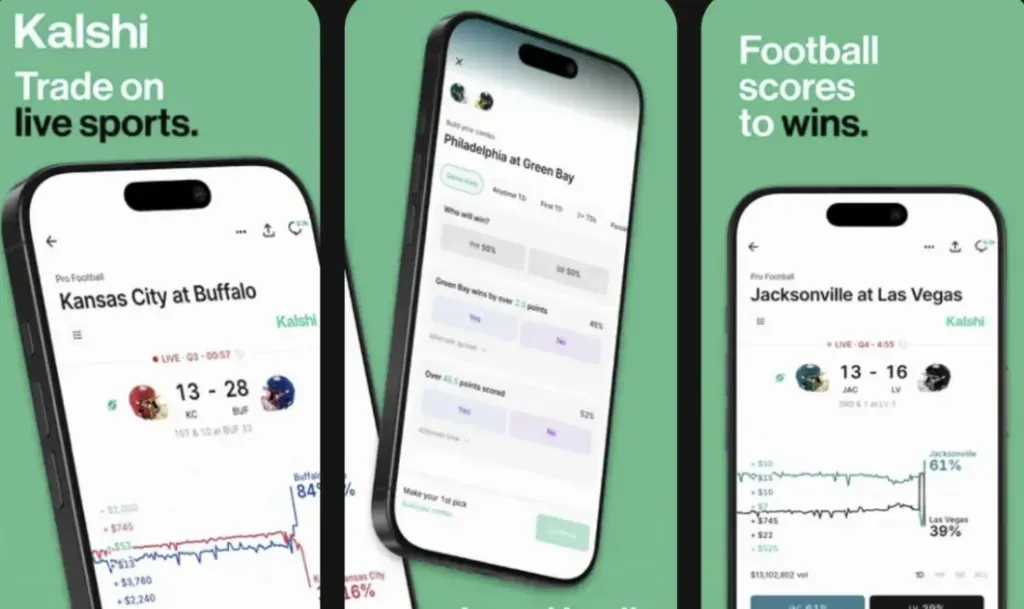
Kalshi’s interface is designed to be understandable for non-professionals while still resembling a real trading venue. Markets are presented as browseable questions, with price points that behave like probability. Buying and selling is intended to feel intuitive: select the side, choose your price, confirm your position.
The experience becomes more “trader-like” when you engage with order mechanics. In active markets, you may see multiple price levels and the ability to place orders at specific prices rather than accepting the current market level. This is where users with exchange experience gain an advantage. They know how to avoid chasing price, how to use patience, and how to reduce fee/spread impact by getting better fills.
Kalshi’s UI also matters because of how users make mistakes. In prediction markets, the most common user error is not clicking the wrong button—it’s misunderstanding what the contract actually asks. A clean interface helps, but it cannot replace reading. Good Kalshi users develop a habit: open the market, read the resolution criteria, then trade. Bad users trade first and complain later.
Mobile usage is generally workable for monitoring and simple trades, but complex workflows—multiple open positions, comparing related markets, tracking implied probabilities across a category—still tend to be easier on desktop. If your approach is casual, mobile is fine. If your approach is systematic, you’ll likely prefer the larger screen and faster navigation.
Finally, the platform’s overall tone is intentionally not casino-like. There is less “celebration” and more “execution.” That can feel dry, but it also reduces the emotional manipulation that makes many gambling products dangerous. Kalshi’s interface encourages you to behave like a market participant rather than like someone chasing a thrill.
Risk, Volatility, and User Responsibility
Kalshi contracts can be volatile because they trade on information. In high-profile markets, prices can change quickly with breaking news, data releases, or late developments. Users should be prepared for swings that feel extreme if they are used to fixed odds. In reality, these swings are the market doing its job: repricing probability as new information arrives.
A crucial idea: being “right” is not always enough. If you buy at a bad price, you can be right and still have a poor outcome. If you enter too early, you can be right and still sit through brutal drawdowns. If you size too large, you can be right and still panic-exit before the market resolves. Kalshi is as much a psychological product as it is a forecasting product.
The platform’s explicit fees also change risk perception. In sportsbooks, costs are hidden in the odds. On Kalshi, costs are more visible, but they are also more likely to be ignored by users who focus only on headline payout. This is why experienced participants think in expected value terms: “Is the price good enough, net of fees and spreads, to justify the risk?”
Responsible participation on Kalshi is less about “play limits” and more about trading discipline:
- size positions so you can survive volatility,
- avoid emotional overtrading around news,
- diversify rather than obsess over one market,
- and never trade something you don’t understand.
If you treat Kalshi like a serious product and respect the mechanics, it can be a compelling platform. If you treat it like entertainment with financial upside, it can become a fast way to lose money while still telling yourself you’re being “smart.” The platform doesn’t force you into either path – you choose.
Deposits on Kalshi (How Funding Actually Works)
Funding a Kalshi account is closer to funding a brokerage account than loading a casino wallet. The platform is designed around fiat on-ramps, with methods that emphasize traceability, compliance, and reversibility control. This directly reflects its regulatory posture and explains why Kalshi does not aggressively push instant, anonymous funding options.
Most users will encounter three broad funding paths: bank transfers, card-based deposits, and in some cases alternative rails that still ultimately resolve in USD. The practical difference between them is not just speed, but cost and friction.
Bank transfer methods are typically the most cost-efficient. They align with Kalshi’s long-term user model: people who plan to trade repeatedly and do not want fees eating into expected value. Bank transfers can take longer to clear, but once available, they usually provide the cleanest experience. Users who think of Kalshi as a “market account” rather than a “betting wallet” tend to gravitate here naturally.
Card-based deposits are faster and more familiar to users coming from sportsbooks or casinos. However, they often come with percentage-based fees and additional risk controls. For casual users making small, infrequent deposits, the convenience can outweigh the cost. For active users, repeated card deposits can quietly become one of the biggest drags on performance.
An important behavioral point: users often underestimate how funding method choices affect long-term outcomes. On an exchange-style platform where edges are thin, paying unnecessary deposit fees is equivalent to starting every trade slightly behind. Kalshi does not hide these costs, but it does require users to be intentional about avoiding them.
Withdrawals on Kalshi (Timelines, Friction, and Expectations)
Withdrawals on Kalshi follow the same philosophy as deposits: structured, compliant, and explicit. This is not a platform built around instant gratification cash-outs. Instead, withdrawals are treated as regulated financial transactions.
Users should expect:
- identity verification to be complete before withdrawals are processed,
- withdrawals to be routed through approved methods,
- and timelines that reflect banking realities rather than gaming platforms.
One common misconception is that regulated equals slow. In reality, withdrawal speed on Kalshi depends largely on method and timing. Bank withdrawals are often predictable and reliable, though not instant. Card withdrawals, where supported, may include fixed fees that are trivial for large balances but meaningful for small ones.
The most important psychological adjustment for users is this: Kalshi is not designed for constant in-and-out cash flow. If you plan to deposit, trade one event, and immediately withdraw every time, the experience will feel inefficient. If you plan to maintain a balance and trade across multiple events, withdrawals feel like a normal part of account management rather than a friction point.
Verification checks during withdrawals are also normal. They are not signals of wrongdoing. They are signals of a platform that expects to answer to regulators. Users who understand this tend to experience less frustration and fewer surprises.
Kalshi Fees in Practice (Why Small Numbers Matter)
Kalshi’s fee structure is transparent, but transparency does not automatically mean understanding. Many users look at a single fee in isolation and conclude it is “small.” In reality, fees compound through behavior.
There are three broad categories of cost on Kalshi:
- trading fees,
- deposit fees,
- withdrawal fees.
Trading fees matter most for active users. If you place multiple trades, enter and exit positions frequently, or trade around volatile events, fees can quietly dominate your net result. A user who makes ten small trades can pay more in fees than a user who makes one larger, well-timed trade with the same gross exposure.
Deposit fees are often overlooked. Card-based funding can feel painless because the fee is embedded in the transaction, but repeated deposits add up. Over a year of active use, deposit fees alone can exceed any promotional credits received.
Withdrawal fees are usually fixed and therefore scale well with balance size. They matter most to users who withdraw frequently or in small increments. One of the simplest optimizations on Kalshi is batching withdrawals rather than treating every small win as a reason to cash out.
The deeper lesson is this: Kalshi rewards fewer, better decisions. If your strategy involves constant clicking, chasing, and reacting, the fee structure will punish you. If your strategy involves patience, selectivity, and sizing discipline, fees become background noise rather than a defining factor.
Liquidity on Kalshi (What It Feels Like to Trade)
Liquidity is the single most important concept for understanding Kalshi beyond surface-level usage. Liquidity determines whether you can enter at a fair price, whether you can exit when you want, and how much your own trade moves the market.
Highly visible events attract liquidity. Major elections, headline economic releases, and championship-level sports events tend to have tighter pricing and more depth. In these markets, trading feels smooth. Prices move, but fills are predictable and exits are realistic.
Niche markets behave differently. You may see:
- wider spreads,
- thinner order books,
- delayed fills,
- or situations where exiting a position requires accepting a worse price than expected.
This is not a flaw unique to Kalshi. It is a feature of all markets. The difference is that many users coming from sportsbooks are not used to thinking about liquidity. They expect to be able to “get out” whenever they want. On Kalshi, exit is a market function, not a platform promise.
Advanced users adjust by:
- trading only liquid markets,
- reducing position size in thin markets,
- or accepting that some positions are effectively held to settlement.
Liquidity also interacts with emotion. Thin markets amplify fear because price moves feel more dramatic. New users sometimes interpret this as manipulation when it is simply the absence of opposing orders. Understanding this dynamic is essential if you plan to trade beyond headline events.
Spreads and Slippage (The Hidden Cost Many Users Miss)
Spreads are the gap between the best available buy price and sell price. On Kalshi, spreads are not constant. They widen and narrow based on participation, timing, and uncertainty.
In highly liquid markets, spreads can be tight enough to feel almost invisible. In thin markets, spreads can be large enough to make immediate entry and exit unviable. This is why impatient market orders are often the most expensive way to trade.
Slippage occurs when the price you expect to trade at is not the price you actually receive. This can happen when:
- the market moves between click and execution,
- your order size exceeds available liquidity at a price,
- or volatility spikes.
For users who treat Kalshi casually, slippage feels unfair. For users who treat it as a market, slippage is a signal: slow down, size down, or change approach.
One of the most effective habits on Kalshi is placing limit orders rather than chasing price. This allows you to define your risk upfront and forces you to be selective. You may miss some trades. That is not a failure. It is a filter against poor entries.
Promotions and Incentives on Kalshi (How to Think About Them)
Kalshi promotions exist, but they are intentionally understated compared to casinos and sportsbooks. This is not accidental. Aggressive bonuses would clash with the platform’s regulatory posture and risk profile.
When Kalshi offers incentives, they tend to be:
- small relative to typical sportsbook bonuses,
- tied to specific actions like completing a trade threshold,
- and framed as credits rather than “free money.”
The correct way to evaluate a Kalshi promotion is not “How much do I get?” but “What behavior does this encourage?” Many incentives require a minimum amount of trading. That trading generates fees and exposure. The promotion is not a gift; it is an invitation to participate.
Savvy users treat promotions as a discount on learning. If you are new and want to experience how markets behave, a small incentive can offset early mistakes. If you are experienced, promotions rarely change strategy. They are marginal improvements, not reasons to trade something you otherwise wouldn’t.
The worst mistake is letting a promotion push you into a market you do not understand or would not trade without the incentive. On Kalshi, misunderstanding a contract costs more than missing a bonus.
How Kalshi Feels Over Time (Not Just on Day One)
First impressions of Kalshi are often misleading. On day one, the platform can feel either refreshingly serious or oddly dry, depending on expectations. Over time, patterns emerge.
Users who succeed on Kalshi tend to:
- reduce how often they trade,
- become more selective about markets,
- care more about price than outcome,
- and treat positions as probabilistic views, not personal beliefs.
Users who struggle often:
- overtrade,
- chase headlines,
- ignore fees and spreads,
- and emotionally anchor to being “right” instead of being well-priced.
Kalshi does not nudge users toward discipline the way professional trading platforms do, but it also does not actively sabotage discipline the way many gambling products do. The platform is neutral. Your behavior determines the experience.
One subtle advantage of Kalshi’s seriousness is burnout resistance. Users who approach it thoughtfully often find it sustainable. There is less pressure to constantly engage. Markets resolve, positions close, and you step away. This is very different from casino environments designed to keep you playing indefinitely.
Who Kalshi Is For (And Who It Is Not)
Kalshi is well-suited for:
- people who enjoy forecasting and probability,
- users comfortable with finance-adjacent tools,
- traders who value transparency over hype,
- and anyone curious about expressing real-world views through markets.
Kalshi is not ideal for:
- users seeking pure entertainment,
- people who dislike reading rules,
- anyone allergic to verification and compliance,
- or users who expect instant withdrawals with zero friction.
This does not mean Kalshi is elitist. It means it is honest about its identity. It does not pretend to be something it isn’t. That clarity is rare in products that touch money, uncertainty, and human psychology.
Understanding Contract Language (Where Most Mistakes Happen)
The single most common source of losses on Kalshi is not being wrong about the world. It is being wrong about what the contract actually says. Event contracts look simple on the surface, but they are legal instruments with precise definitions. The outcome you think you are trading is not always the outcome the contract settles on.
Every Kalshi contract includes:
- a specific question,
- explicit resolution criteria,
- and a defined authoritative source.
Advanced users treat these three elements as non-negotiable reading. Casual users often skim. The difference between the two approaches explains a large portion of negative user experiences.
For example, an economic contract may specify whether it uses preliminary data, revised data, or a specific agency’s publication. A sports contract may define what counts as a win in edge cases like postponements, cancellations, or overtime. A political contract may specify certification dates rather than election night results. These distinctions are not academic. They determine payouts.
One of the most dangerous assumptions users make is that “everyone knows what this means.” Markets do not settle on common sense. They settle on text. If you cannot clearly articulate how a contract resolves in unusual scenarios, you should not trade it. The market price already reflects the uncertainty that others have priced in. Ignoring that uncertainty is how people pay tuition to the platform.
Probability Versus Narrative (Why Being Right Is Not Enough)
Kalshi rewards probabilistic thinking, not conviction. Many users lose money not because they picked the wrong outcome, but because they paid too much for the right one. A correct outcome bought at a bad price is still a bad trade.
Narratives are powerful. “This team is better.” “This politician has momentum.” “This data always surprises.” Narratives drive participation, but they do not guarantee value. By the time a narrative feels obvious, it is often already priced into the market.
Advanced users constantly ask one question:“Is my estimate of probability meaningfully different from the market’s?”
If the answer is no, there is no trade. If the answer is yes, the next question is whether the difference is large enough to justify fees, slippage, and variance. Kalshi is not about certainty. It is about mispricing.
This is why many experienced users are comfortable trading outcomes they do not emotionally support. They are not betting on what they want to happen. They are trading on what they think the crowd has misjudged. That mental separation is crucial if you want to avoid turning Kalshi into an emotional rollercoaster.
Timing Strategies (When You Enter Matters as Much as What You Choose)
Timing is an underappreciated dimension of Kalshi trading. Markets behave differently depending on where they are in the event lifecycle.
Early markets often suffer from:
- thin liquidity,
- wide spreads,
- narrative-driven pricing.
Late markets often suffer from:
- crowded positioning,
- emotional overreaction,
- rapid repricing around new information.
Neither phase is inherently better. They simply reward different behaviors. Early markets reward patience and research. Late markets reward speed and discipline. What they both punish is impulsiveness.
Some users prefer to enter early, accept volatility, and exit before the event as liquidity improves. Others prefer to wait until uncertainty collapses and trade short-term movements. Both approaches can work. What fails consistently is entering late with long-term expectations or entering early without tolerance for drawdowns.
Kalshi does not force you to choose a style, but it does force you to live with the consequences of your timing. Understanding where a market is in its lifecycle helps you align expectations with reality rather than being surprised by normal market behavior.
The Role of Information (Public, Private, and Illusory)
Kalshi markets are driven by information, but not all information is equal. Some information is public but slow to be processed. Some is widely known but underweighted. Some feels important but is irrelevant to settlement.
Advanced users learn to distinguish between:
- information that changes probabilities,
- information that changes narratives,
- and information that changes nothing.
For example, a dramatic news headline may move price sharply even if it does not affect the underlying resolution criteria. This creates short-term opportunity but also short-term risk. Conversely, a quiet procedural update may barely register emotionally but have real implications for settlement.
One trap many users fall into is overestimating their informational advantage. Just because you saw something on social media first does not mean the market has not already priced it in. Kalshi markets are competitive. If information is obvious, assume someone else has acted on it.
The real edge often comes from interpretation, not discovery. Understanding how new information should affect probability relative to current price is far more valuable than simply being fast.
Legal Reality and Jurisdictional Risk (Plain English)
Kalshi’s legal position is both its greatest strength and its greatest source of uncertainty. As a federally regulated exchange, Kalshi operates under a different framework than gambling operators. However, that framework is still being tested in practice, especially when it intersects with state-level authority.
For users, the most important point is this legal disputes affect access, not settlement.
If you are able to trade a contract, settlement rules apply as written. The risk is not that Kalshi will arbitrarily refuse to pay a resolved contract. The risk is that certain categories may become unavailable in certain jurisdictions with little notice.
Sports contracts are the clearest example. They attract scrutiny because they look familiar to regulators accustomed to policing sportsbooks. Political and economic contracts tend to face less resistance because they align more closely with traditional prediction market use cases.
Users should treat Kalshi availability as dynamic rather than static. This is not fear-mongering. It is realism. Platforms operating at regulatory boundaries evolve. Sensible users diversify their expectations and avoid relying on a single category for all activity.
Kalshi Versus Polymarket (Regulation Versus Reach)
Comparisons between Kalshi and Polymarket are inevitable. They represent two different philosophies of prediction markets.
Kalshi emphasizes:
- US regulation,
- compliance,
- fiat rails,
- and long-term legitimacy.
Polymarket emphasizes:
- global access,
- crypto-native infrastructure,
- speed and flexibility,
- and fewer barriers to entry.
For users, the tradeoff is clear. Kalshi offers a more structured, regulated environment but with stricter controls and evolving availability. Polymarket offers broader reach and faster iteration but without the same regulatory assurances.
Neither is objectively better. They serve different risk tolerances. Users who value regulatory clarity and mainstream viability often prefer Kalshi. Users who value access and experimentation often prefer Polymarket. Some use both, understanding the strengths and weaknesses of each.
Kalshi Versus PredictIt (Scale and Evolution)
PredictIt played a foundational role in introducing prediction markets to US audiences, especially around politics. However, it operates under a much narrower framework and with significant constraints on market size and participation.
Kalshi differs in ambition. It is built to scale across categories, volumes, and user types. Its exchange model supports larger participation and more diverse contracts. The user experience is also more modern and flexible.
Where PredictIt often felt like an academic experiment, Kalshi feels like an attempt to build infrastructure. This does not guarantee success, but it explains why Kalshi attracts both supporters and critics. Infrastructure invites scrutiny. Experiments can hide.
Kalshi Versus Sportsbooks (Different Tools for Different Goals)
It is tempting to ask whether Kalshi can replace sportsbooks. The honest answer is: it should not try to.
Sportsbooks are optimized for entertainment, instant clarity, and frictionless betting. Kalshi is optimized for pricing uncertainty and allowing exits. A sportsbook is a finished product. Kalshi is a market.
If your goal is to place a quick bet on a game with minimal thought, a sportsbook is more suitable. If your goal is to trade how a market values a sports outcome over time, Kalshi offers something sportsbooks fundamentally cannot.
Problems arise when users expect Kalshi to behave like a sportsbook. That expectation mismatch causes frustration. Users who understand the difference often find Kalshi intellectually satisfying even when it is less “fun.”
Using Kalshi Without Turning It Into Gambling
The line between trading and gambling is not defined by the platform. It is defined by behavior. Kalshi can be used intelligently or recklessly. The difference lies in approach.
Healthy Kalshi usage tends to include:
- predefined position sizes,
- selective market participation,
- acceptance of uncertainty,
- and a willingness to sit out when no clear edge exists.
Unhealthy usage looks familiar:
- chasing losses,
- overreacting to headlines,
- trading emotionally charged outcomes,
- and mistaking activity for strategy.
One of Kalshi’s quiet advantages is that it does not constantly push you to act. There are no flashing prompts demanding engagement. You can log in, do nothing, and log out. That neutrality is rare and valuable.
If you treat Kalshi as a tool for expressing views about the future in a structured way, it can be intellectually rewarding. If you treat it as a thrill machine, it will eventually punish you the same way any gambling-adjacent product does.
Kalshi Fees

Cost on Kalshi is explicit rather than hidden in the price, which separates an exchange-style product from a traditional sportsbook. Charges fall into three broad groups: trading fees applied when a position is opened or closed, deposit fees that vary by funding method, and withdrawal fees that are usually fixed. For active traders, these amounts compound through behavior, so a participant who places many small trades can pay considerably more than one who makes fewer, larger, well-timed trades with the same gross exposure.
Because thin edges are common in event contracts, understanding the full cost structure is central to net results. A complete breakdown of Kalshi fees covers how trading, funding, and redemption costs interact, and why batching withdrawals and choosing lower-cost deposit rails preserves expected value over time.
Kalshi App
Kalshi delivers its markets through a mobile application designed to feel closer to a financial tool than a gaming product. Markets are presented as browseable questions with price points that behave like probability, and buying or selling follows a consistent flow of selecting a side, choosing a price, and confirming a position. Monitoring open contracts and placing simple trades are straightforward on mobile, while more complex workflows, such as tracking implied probabilities across a category, remain easier on desktop.
Availability and device requirements matter for anyone deciding how to participate day to day. A full overview of the Kalshi app details platform support, core screens, and how order mechanics translate to a smaller display for users who trade primarily from a phone.
Kalshi Referral Code

Referral mechanics on Kalshi are intentionally understated compared with the aggressive incentives used by sportsbooks and casinos. A referral is typically shared between an existing account holder and a prospective one, with any credit conditional on the new user completing verification and reaching a defined activity threshold. This structure reflects the platform’s regulated posture, where incentives are framed as credits tied to participation rather than open-ended rewards.
The practical value of any such offer depends on its exact conditions at the time of registration. A current summary of the Kalshi referral code explains how the mechanic works, who qualifies, and what actions release the associated credit.
Kalshi in California
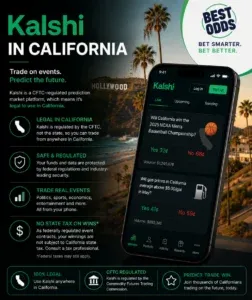
Because enforcement posture around event contracts is set largely at the state level, availability of certain categories can differ from one jurisdiction to another. California has been among the states where sports-related contracts have drawn regulatory correspondence, and the position there can shift with legal developments rather than remaining fixed. Political and economic contracts generally face less resistance than sports markets, which are the most contested category nationwide.
For residents assessing what they can access, the current standing is worth checking rather than assuming. A dedicated overview of Kalshi California tracks which categories are available and how the regulatory situation has evolved.
Kalshi in Texas

Texas is another state where the classification of sports event contracts has attracted attention, and where availability should be treated as dynamic rather than static. The underlying settlement rules apply as written wherever a contract can be traded; the practical variable is whether a given category is accessible to residents at a particular moment. That distinction, access versus settlement, is central to understanding how state-level friction affects users.
Anyone trading from the state benefits from confirming the latest position before funding an account. A current overview of Kalshi Texas outlines available categories and the regulatory context specific to the state.
Kalshi in Florida

Florida has featured in the broader jurisdictional discussion surrounding prediction markets, including exclusions from specific promotions tied to sports outcomes. As with other states, the platform’s federal exchange status frames its national narrative, while state authorities retain their own interest in how sports-related contracts are treated. This creates a situation where category availability can change with limited notice.
Residents evaluating their options should treat availability as subject to change and verify it directly. A dedicated overview of Kalshi Florida details which markets are accessible and how the state fits into the wider regulatory picture.
Kalshi in Washington State

Washington State has historically maintained a stricter stance on several categories of online real-money activity, which makes its treatment of event contracts a distinct case worth examining on its own. The general principle still holds: settlement rules do not vary once a contract is tradable, but access to particular categories can be limited depending on state enforcement posture and ongoing legal interpretation.
Given the state’s particular history, checking current access is especially advisable. A dedicated overview of Kalshi Washington State tracks the categories available to residents and the regulatory background behind them.
Kalshi in New York

New York has appeared among the states excluded from certain sports-tied promotions and has been part of the wider conversation about how event contracts intersect with state authority. As with comparable jurisdictions, the relevant risk for users is not that resolved contracts go unpaid, but that specific categories may become unavailable to residents depending on the legal environment at a given time.
For residents weighing participation, the current position is the detail that matters most. A dedicated overview of Kalshi New York outlines available markets and how the state’s stance has developed.
Kalshi Payout

Redemption on Kalshi follows the same structured, compliant approach as funding. Withdrawals are treated as regulated financial transactions, routed through approved methods, and processed only once identity verification is complete. Timelines reflect banking realities rather than the instant cash-out expectations common to gaming platforms, with bank transfers typically predictable and card-based methods potentially carrying fixed fees that matter most on small balances.
Understanding how proceeds are credited helps users plan around timing and verification checks. A full account of the Kalshi payout process explains how resolved contracts are settled to the account and what influences withdrawal speed.
Kalshi Promo Code

Promotional codes on Kalshi are modest and conditional, consistent with a platform that positions itself as a regulated exchange rather than an entertainment product. When a code is available, it is generally applied at registration and tied to specific actions, such as completing verification or reaching a set level of trading activity, rather than functioning as a standalone reward. The appropriate way to assess any code is to ask what behavior it encourages, not simply how large the credit appears.
Because terms change over time, current conditions are the deciding factor. A summary of the Kalshi promo code explains how it is entered, what it requires, and how it compares with the platform’s other incentives.
Kalshi Sign-Up Bonus

A sign-up incentive on Kalshi tends to be small relative to typical sportsbook offers and framed as trading credit rather than free funds. New accounts may encounter such an offer during onboarding, usually conditional on completing identity verification and meeting an activity threshold before any credit is released. This design mirrors the platform’s regulated posture, where incentives serve as an invitation to participate rather than a guaranteed benefit.
For newcomers, the value of such an offer lies in offsetting early learning rather than driving strategy. A current overview of the Kalshi sign-up bonus details eligibility, conditions, and what an account holder must do to qualify.
Kalshi Age Requirement

Access to Kalshi is restricted by a minimum-age requirement that applies to every account and every market, not only to specific promotions. Identity verification is used to confirm eligibility before trading or redemption is permitted, which is a direct consequence of the platform’s status as a regulated exchange. This makes early completion of verification the practical prerequisite for participating in any time-sensitive market.
Prospective users should confirm they meet the threshold before funding an account. A clear explanation of the Kalshi age requirement covers the minimum age and how verification confirms it.
Kalshi Parlay
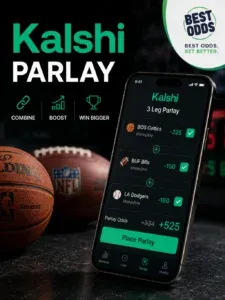
Beyond single-outcome contracts, Kalshi has extended its sports coverage into multi-leg formats that combine several event contracts into one position. The structure differs from a sportsbook equivalent because each leg is priced as an independent market reflecting a market-implied probability rather than fixed bookmaker odds. As a result, the combined pricing, and the ability to exit before settlement, depend on the liquidity present in each underlying market.
Anyone considering a combined position benefits from understanding how the legs interact. A full explanation of the Kalshi parlay covers how multi-leg contracts are constructed, priced, and settled on the exchange.
Kalshi 15-Minute Markets
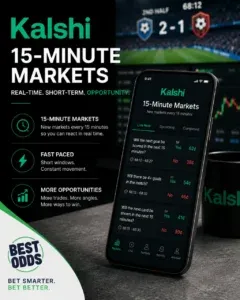
Contract duration on Kalshi varies widely, and short-duration formats compress the entire lifecycle of listing, pricing, and settlement into a brief window rather than spanning days or months. This changes how liquidity builds and how quickly timing decisions play out, since the market resolves almost as soon as it becomes active. Such formats reward quick, disciplined decision-making and place a premium on understanding resolution criteria before entering.
Because these markets behave differently from longer-dated contracts, they warrant their own explanation. A dedicated overview of Kalshi 15-minute markets details how the short lifecycle affects pricing, liquidity, and settlement.
How to Construct a Kalshi Trade Intelligently
An intelligent Kalshi trade starts long before you click buy or sell. The first step is not choosing a side. It is deciding whether the market is worth trading at all. Many markets exist simply because they can, not because they are well-priced or liquid enough to justify participation. Discipline begins with saying no.
Once a market passes the first filter, the next step is forming a probabilistic view. This does not mean guessing the outcome. It means estimating a range of probabilities and asking whether the current price sits meaningfully outside that range. If your estimate and the market’s estimate overlap substantially, there is no edge. Trading anyway is just activity, not strategy.
Entry execution is where many otherwise sound ideas are ruined. Chasing price because of fear of missing out is one of the fastest ways to lock in negative expected value. Intelligent users decide in advance what price they are willing to accept and let the market come to them. If it never does, they move on. Missing trades is not a cost. Bad trades are.
Finally, an intelligent trade includes an exit plan. Will you hold to settlement regardless of volatility, or will you exit if the price moves in your favor early? Will you cut losses if the market reprices against you, or are you prepared to tolerate drawdowns? Answering these questions after the trade is placed is already too late.
Position Sizing and Risk Control
Position sizing is the quiet difference between users who survive long enough to learn and users who burn out quickly. On Kalshi, volatility can be deceptive because contracts settle to simple outcomes, but price paths can be turbulent.
A common mistake is sizing positions as if outcomes were binary and immediate. In reality, mark-to-market swings can be large even when final settlement is favorable. If your position size causes emotional distress during normal price movement, it is too large. This is not a moral judgment. It is a mechanical reality.
Intelligent users think in terms of portfolio exposure, even if their “portfolio” consists of only a few open positions. No single contract should be able to meaningfully damage your account. This is especially important in markets driven by news, where sudden repricing can happen without warning.
Kalshi does not impose leverage, but poor sizing effectively creates leverage psychologically. Treating small accounts with the same respect as large ones is one of the hardest lessons to internalize, and one of the most valuable.
Common Mistakes That Cost Users Money
One of the most common mistakes is trading without understanding settlement rules. Users assume the obvious outcome will count, only to discover later that the contract defined the event more narrowly. This is entirely preventable and entirely self-inflicted.
Another frequent mistake is overtrading. Because Kalshi markets are interesting, users feel compelled to participate constantly. This leads to fee accumulation, exposure to randomness, and emotional fatigue. The platform does not reward constant engagement. It rewards selectivity.
Users also tend to overweight recent information. A dramatic headline can cause price spikes that feel meaningful but fade quickly once the initial reaction passes. Trading these moments without a clear framework often results in buying tops or selling bottoms.
Finally, many users conflate confidence with correctness. Feeling strongly about an outcome does not make it mispriced. Markets routinely reflect strong consensus. Trading consensus without an informational or analytical edge is rarely profitable over time.
Who Should Absolutely Not Use Kalshi
Kalshi is not suitable for everyone, and pretending otherwise would be dishonest.
It is not appropriate for users who:
- dislike reading rules or definitions,
- expect instant, frictionless withdrawals,
- want entertainment more than analysis,
- or struggle with impulse control around money.
It is also not ideal for users who are uncomfortable with uncertainty. Prediction markets do not offer the psychological safety of fixed odds. Prices move. Being “right” can still feel uncomfortable if the market disagrees with you temporarily.
Users seeking guaranteed value from promotions or bonuses will likely be disappointed. Kalshi incentives are modest and conditional. They do not offset poor decision-making.
Finally, anyone hoping Kalshi will replace casual betting without requiring thought will find the experience frustrating. Kalshi asks more of its users than most gambling products. That is part of its value proposition, not a flaw.
Who Kalshi Is Especially Well-Suited For
Kalshi shines for users who enjoy thinking about the future in structured terms. If you like asking “what does the market believe, and why?” the platform is intellectually engaging.
It is particularly well-suited for:
- analytically minded users,
- traders interested in event-driven exposure,
- people who follow macroeconomic data,
- and users who appreciate transparency over spectacle.
Kalshi also appeals to users who want a sense of participation in real-world forecasting rather than pure chance. Watching prices move as information flows can be educational even when you are not actively trading.
For professionals or semi-professionals, Kalshi can function as a sandbox for testing probabilistic thinking without engaging in more complex or capital-intensive markets. The simplicity of contract structure is a feature, not a limitation.
The Long-Term Outlook for Prediction Markets in the US
Prediction markets occupy a strange position in the US ecosystem. They are intuitively appealing, empirically useful, and politically sensitive. Their ability to aggregate information makes them powerful, but that same power raises regulatory and cultural concerns.
Kalshi represents one attempt to reconcile prediction markets with US regulatory norms. Whether this attempt ultimately succeeds will shape the entire sector. If Kalshi proves that event contracts can coexist with existing frameworks, it may unlock broader adoption. If it fails, prediction markets may remain fragmented or pushed offshore.
Sports will likely remain the flashpoint. They are popular, lucrative, and deeply entrenched in state-level regulation. Other categories such as economics and policy face fewer existential challenges and may become the platform’s long-term foundation.
Regardless of outcome, the broader trend is clear: people want ways to express beliefs about the future that are more meaningful than polls and more flexible than traditional bets. Prediction markets meet that demand. The question is not whether they will exist, but where and under what rules.
Where Kalshi Fits in That Future
Kalshi positions itself as infrastructure, not novelty. It wants to be the place where event contracts live legitimately in the US. This is a slower, more difficult path than chasing global access or speculative hype, but it is also the only path that leads to mainstream acceptance.
If Kalshi succeeds, it may become the reference point for regulated prediction markets. If it fails, it will still have demonstrated what is possible and where the friction lies. Either way, it is an important experiment.
For users today, Kalshi is best viewed as a tool rather than a destination. It is a way to engage with uncertainty in a structured, transparent way. Used thoughtfully, it can be rewarding intellectually and financially. Used carelessly, it behaves like any other high-variance product.
The platform does not promise easy money. It offers something rarer: a chance to trade belief itself, under rules that can be read, understood, and enforced.
Conclusion
Kalshi is not a sportsbook wearing a regulatory costume, nor is it a casino masquerading as finance. It is a genuine attempt to turn real-world uncertainty into a structured, tradable market under US federal oversight. That alone makes it one of the most intellectually serious platforms in the consumer prediction space.
What ultimately defines the Kalshi experience is not the categories it offers or the headlines it attracts, but the mindset it requires. Kalshi does not reward impulse. It does not reward conviction divorced from pricing. It does not reward activity for its own sake. It rewards patience, probabilistic thinking, and respect for market mechanics. Users who bring those traits often find Kalshi compelling, sustainable, and even educational. Users who do not often feel confused, frustrated, or disappointed.
The platform’s regulatory posture is both its greatest strength and its greatest constraint. It enables legitimacy, transparency, and a path toward mainstream adoption, while also imposing friction, verification, and evolving availability in contested areas like sports. Kalshi is building infrastructure, not chasing novelty. That means progress is slower, but the foundation is sturdier.
Kalshi should not be evaluated by the standards of gambling products. It should be evaluated by the standards of markets. When judged on those terms, it succeeds more often than it fails. It is not perfect, and it is not finished, but it is serious in a space that rarely is.
For users willing to meet it on its own terms, Kalshi offers something rare: a disciplined way to trade beliefs about the future without illusion, without hidden mechanics, and without pretending that uncertainty can ever be eliminated.
Frequently Asked Questions About Kalshi
Is Kalshi legal in the United States?
Kalshi operates as a federally regulated platform under the Commodity Futures Trading Commission as a Designated Contract Market. This gives it a different legal basis than sportsbooks or casinos. However, availability of certain categories, particularly sports event contracts, may vary by jurisdiction due to ongoing legal and regulatory challenges.
Is Kalshi the same as sports betting?
No. While some Kalshi contracts involve sports outcomes, the structure is fundamentally different. Kalshi uses event contracts traded in a market, not odds set by a bookmaker. You are trading against other participants, not against the house, and prices reflect market-implied probabilities rather than sportsbook odds.
Can you make money on Kalshi?
It is possible to profit on Kalshi, but there are no guarantees. Success depends on identifying mispriced probabilities, managing fees and spreads, and controlling risk. Being correct about an outcome is not sufficient if the price paid does not justify the risk taken.
What happens if I am right but the price moves against me?
Kalshi positions are marked to market before settlement. This means prices can move against you temporarily even if the final outcome favors your position. If you hold to settlement and the contract resolves in your favor, you receive the settlement value. However, interim volatility can be significant.
Do I have to complete identity verification?
Yes. Identity verification is mandatory to trade fully and withdraw funds. This is a direct consequence of Kalshi’s regulated exchange status and is not optional.
How are Kalshi contracts settled?
Each contract includes explicit resolution criteria and an authoritative source. Settlement is based strictly on those terms. Kalshi does not resolve contracts based on opinion, sentiment, or informal interpretation.
Are there fees on Kalshi?
Yes. Kalshi charges trading fees and may charge deposit and withdrawal fees depending on the method used. Fees are explicit and should be factored into any trading decision, especially for frequent or small trades.
Can I exit a position before settlement?
In many markets, yes, provided there is sufficient liquidity. Exiting early is done by selling the contract back into the market at the prevailing price. Exit is not guaranteed in thin markets.
Is Kalshi suitable for beginners?
Kalshi can be used by beginners, but it requires willingness to learn how event contracts work. Users who take time to understand pricing, settlement rules, and fees tend to have a better experience than those who approach it casually.
What is the biggest risk when using Kalshi?
The biggest risks are misunderstanding contract terms, overtrading, ignoring fees and spreads, and treating the platform like a gambling product rather than a market. Legal availability changes can also affect access to certain categories.
Does Kalshi offer bonuses?
Kalshi may offer limited promotions or trading credits, but they are modest compared to sportsbooks and often tied to specific conditions. Promotions should be viewed as secondary to sound decision-making, not as a primary reason to trade.
Can Kalshi replace sportsbooks or casinos?
Kalshi is not designed to replace sportsbooks or casinos. It serves a different purpose. Users looking for entertainment-first betting experiences may prefer traditional platforms. Users interested in trading probability and market dynamics may find Kalshi more compelling.
UK iGaming Writer - With 10+ years in tech, crypto, igaming, and finance, Ali has written across many platforms covering crypto, tech, and gambling news, reviews, and guides. He specialises in content on igaming, sports betting, and crypto trends in emerging markets. Outside of work, Ali enjoys cricket and travelling.
