


Epstein Documents Reveal Early Crypto Investment Role as Prediction Markets Price Industry Impact

The Department of Justice released over 3.5 million pages of documents related to convicted sex offender Jeffrey Epstein on January 30, 2026, revealing previously undisclosed connections to the cryptocurrency industry during its formative years.[1][3][4] The files show Epstein held a $3 million stake in major cryptocurrency exchange Coinbase and participated in funding discussions for Bitcoin infrastructure projects between 2011 and 2016.[8][9][10]
The revelations have created measurable volatility across digital asset markets, with Bitcoin falling below $80,000 in the days following the document release.[13][14][15] Simultaneously, prediction market sites have seen increased activity in event contracts tied to cryptocurrency regulation and industry leadership, as traders attempt to price the long-term implications of these disclosures.[16][17]
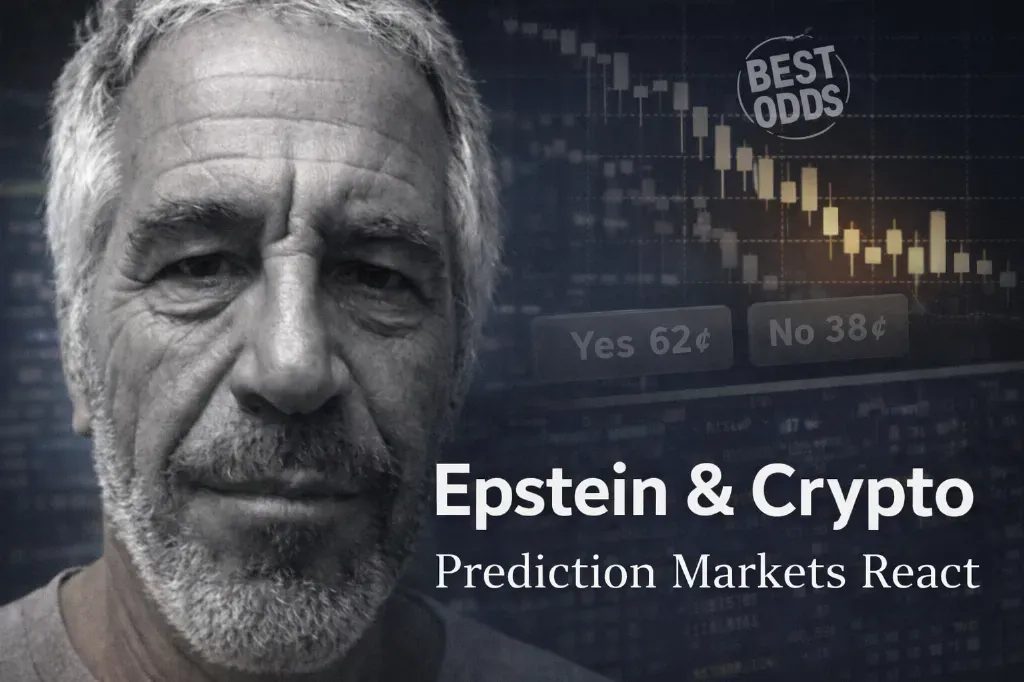
Documented Cryptocurrency Investments
The newly released files contain emails and financial records detailing Epstein’s involvement in the cryptocurrency ecosystem during a critical development period. In December 2014, Epstein invested $3 million in Coinbase through a United States Virgin Islands limited liability company during the exchange’s Series C funding round, according to documents included in the Justice Department release.[8][9]
Email correspondence shows Epstein’s team communicated directly with Coinbase co-founder Fred Ehrsam about the investment. One email from Ehrsam stated he had “a gap between noon and 3 PM today” and noted it “would be nice to meet him if convenient,” referencing a potential meeting related to the funding round.[8]
The documents also reveal connections to Blockstream, a company focused on Bitcoin infrastructure development. Emails from 2014 show correspondence between Epstein and Blockstream co-founder Austin Hill, including discussions about potential meetings.[10][11] The files indicate Epstein was introduced to Blockstream during the company’s seed-round investor roadshow through Massachusetts Institute of Technology Media Lab director Joi Ito.[11]
Additional records show Epstein tracked Bitcoin’s development as early as 2011, when the cryptocurrency was trading above $30 before experiencing a significant price decline.[10] A 2013 briefing provided to Epstein evaluated potential opportunities that Bitcoin presented as a means of trade. In a July 2014 email, Epstein described Bitcoin as “a brilliant idea, but it also has some serious drawbacks.”[10]
Market Response and Volatility
Cryptocurrency markets experienced heightened volatility following the January 30 document release. Bitcoin, which had been trading near recent highs, dropped below the $80,000 threshold within days of the files becoming public.[13][14] Data from market analytics firms indicated approximately $2.56 billion in cryptocurrency positions were liquidated during this period.[15]
The volatility extends beyond price movements. Industry observers have noted concerns about reputational exposure as the files reveal how extensively Epstein positioned himself within early cryptocurrency funding channels.[12] The documents show he maintained connections to academic institutions, technology investors, and blockchain infrastructure projects during a period when the sector was establishing its legitimacy.[7][10]

The Coinbase investment alone represents a significant financial stake. The $3 million position acquired during the 2014 Series C round at a $400 million valuation would have appreciated substantially as Coinbase grew into the largest cryptocurrency exchange in the United States, now carrying a market capitalization near $51 billion.[8][9]
Separate emails reference attempts by venture capital firm Blockchain Capital to purchase Epstein’s Coinbase stake in January 2018.[8] Correspondence shows the firm initially offered to buy the position at a $2 billion valuation, later adjusting the offer to purchase 50 percent of the holdings at a $4 billion valuation for approximately $14.6 million.[8]
Prediction Markets Price Regulatory Uncertainty
As the cryptocurrency industry processes these revelations, traders on prediction market sites have increased activity in event contracts tied to potential regulatory actions and sector developments.[16][17] Just like standard sports betting, a prediction market can adjust in real-time to reflect the updated thoughts and opinions of traders.
Prediction market apps now offer contracts on various cryptocurrency-related outcomes, including potential regulatory investigations, leadership changes at major exchanges, and policy decisions from financial oversight bodies.[16] These platforms allow participants to buy, sell, and trade event contracts on measurable outcomes, creating a real-time pricing mechanism for uncertainty.
The mechanics of these markets parallel traditional sports betting in key ways. Just like with regular sports betting, there is always a winner and a loser when event contracts reach their resolution date. However, a prediction market works in pairs, so it requires an equal number of traders taking opposite positions on an outcome.
Crypto prediction markets have become particularly active following the Epstein file release, with traders attempting to assess whether the documented connections will lead to increased regulatory scrutiny of early cryptocurrency funding sources. The markets function as a mechanism for aggregating diverse opinions about future developments, with prices adjusting as new information becomes available or as trader sentiment shifts.
Sports bettors can wager at bookmakers regardless of who else is also betting. By contrast, prediction market sites require matched positions, meaning every trader predicting a particular outcome must be paired with another trader taking the opposite position. This structure creates liquidity requirements that can make markets more responsive to significant new information.
Industry Connections and Academic Funding
The released documents detail how Epstein cultivated relationships across the cryptocurrency sector through academic and venture capital channels. His connection to the Massachusetts Institute of Technology Media Lab proved particularly significant, as the lab served as a nexus for early blockchain research and development.[10][11]
The files show Epstein donated to Massachusetts Institute of Technology staff involved in cryptocurrency and digital currency research.[10] Internal Massachusetts Institute of Technology correspondence revealed that some staff members were aware of concerns about accepting funds from Epstein, with some documents referring to him by the code name “Voldemort” to avoid using his name in official records.[10]
Emails between Epstein and venture capitalist Peter Thiel from July 2014 show discussions about Bitcoin’s future prospects.[10] Additional correspondence indicates Epstein maintained an interest in how cryptocurrency technology might intersect with financial systems and digital currency development.[7][10]
The Department of Justice has stated it found no evidence that Epstein used Bitcoin to launder funds or evade financial scrutiny.[10] The documents suggest his involvement was primarily as an investor, relationship broker, and interested observer during the cryptocurrency sector’s early development phase.[10][12]
Ongoing Document Review
The January 30 release represents a substantial portion of materials collected under the Epstein Files Transparency Act, which President Trump signed into law on November 19, 2025.[1][19] The legislation required the Department of Justice to produce all files related to Epstein and co-conspirator Ghislaine Maxwell.[1][5]
According to a letter from Deputy Attorney General Todd Blanche, approximately 200,000 pages have been redacted or withheld based on various privileges, including attorney-client privilege or deliberative process privilege.[1][2] The Department of Justice indicated it is still attempting to obtain additional documents that could be released in future tranches.[1]
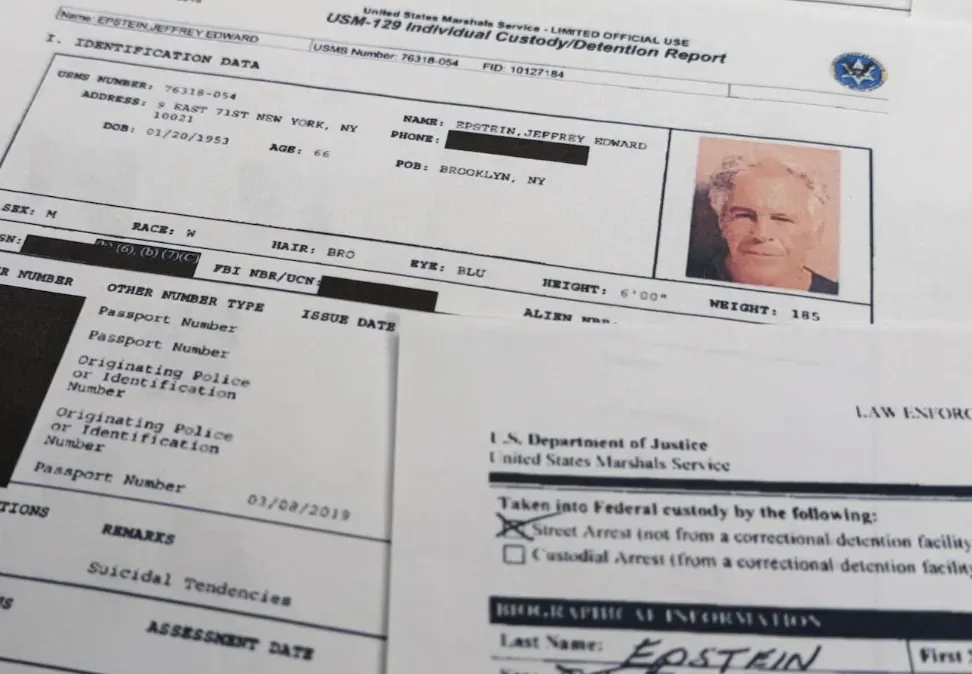
The files were collected from five primary sources: the Florida and New York cases against Epstein, the New York case against Maxwell, the New York cases investigating Epstein’s death, the Florida case investigating a former butler of Epstein, multiple Federal Bureau of Investigation investigations, and the Office of Inspector General investigation into Epstein’s death.[1]
More than 500 attorneys and reviewers from the Department of Justice contributed to the document review effort.[1] The department emphasized that redactions were limited to the protection of victims and their families, with notable individuals and politicians not redacted from the release of any files.[1]
Prediction Markets as Sentiment Indicators
The increased activity on prediction market apps following the Epstein file release demonstrates how these platforms function as real-time sentiment indicators for complex, evolving situations.[16][17] Traders attempting to predict outcomes related to regulatory actions, policy changes, or industry developments must weigh multiple factors and publicly available information.
The prediction market sector has experienced significant growth, with some platforms reporting substantial increases in trading volume across political outcomes, sports events, and entertainment awards.[17][18] The mechanics allow participants to express views on future events by buying and selling event contracts that resolve to specific outcomes.
For the cryptocurrency industry, prediction markets offer a mechanism to gauge collective assessment of how the Epstein revelations might influence future developments. Contract prices reflect the aggregated views of traders who have placed capital at risk based on their analysis of available information.
Just like traditional sports betting, a prediction on these markets must be correct for a participant to win a payout. The requirement for paired trading and the financial stakes involved create incentives for participants to carefully evaluate probabilities and potential outcomes.
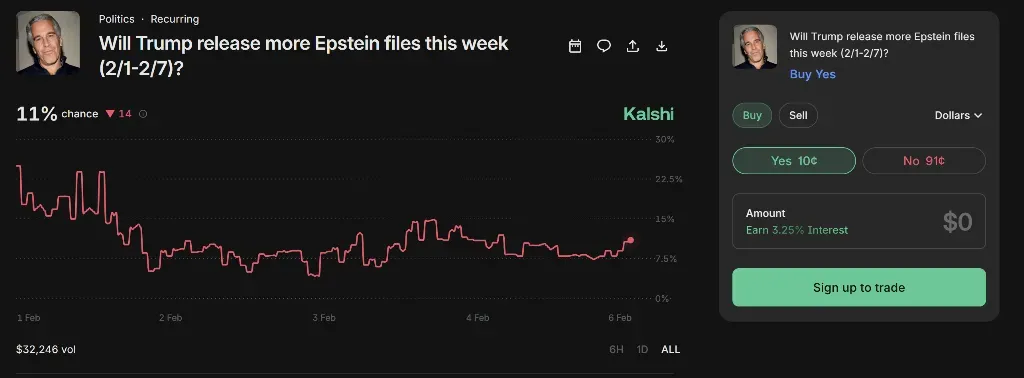
The documents continue to be analyzed by journalists, researchers, and market participants attempting to understand the full extent of Epstein’s financial network and its implications for industries where he maintained connections.[4][5][20] As additional information emerges from the released files, prediction market sites may see further adjustment in contracts tied to cryptocurrency regulation and sector developments.
The Department of Justice has indicated that while many parts of the release remain subject to interpretation, the agency has not found evidence that Epstein’s cryptocurrency involvement extended beyond investment and networking activities.[10] The files portray someone who tracked Bitcoin’s development with interest and positioned himself within funding channels during the technology’s early years, rather than someone who played a technical or operational role in cryptocurrency projects.[10][12]
References
[1] U.S. Department of Justice, Office of Public Affairs. “Department of Justice Publishes 3.5 Million Responsive Pages in Compliance with the Epstein Files Transparency Act.” Press Release, January 30, 2026.
[2] Blanche, Todd (Deputy Attorney General). Letter to Congress regarding Epstein Files review process and redactions. U.S. Department of Justice, January 30, 2026.
[3] Stein, Perry and Wang, Amy B. “Justice Department says it’s releasing 3 million more documents from Epstein files.” The Washington Post, January 30, 2026.
[4] Farhi, Arden. “Massive trove of Epstein files released by DOJ, including 3 million documents and photos.” CBS News, January 31, 2026.
[5] CNN Politics. “January 30, 2026 — DOJ releases millions of pages of documents in Epstein investigation.” CNN, January 30, 2026.
[6] Al Jazeera. “US Department of Justice releases 3 million new Epstein files.” Al Jazeera, January 30, 2026.
[7] NBC News. “Key takeaways: Epstein files rock the rich and powerful as Trump, Musk among mentions.” NBC News, February 5, 2026.
[8] CoinDesk. “DOJ emails show Coinbase co-founder discussed meeting Jeffrey Epstein during 2014 investment talks.” CoinDesk, February 4, 2026.
[9] The Washington Post. “Jeffrey Epstein made lucrative investment in crypto exchange Coinbase.” The Washington Post, February 3, 2026.
[10] Blockhead. “Epstein Tracked Bitcoin’s Rise and Funded Early Infrastructure, Files Show.” Blockhead, February 3, 2026.
[11] Yahoo Finance. “Early Bitcoin Dev Calls on Adam Back to Resign After Epstein Files Revelations.” Yahoo Finance, February 4, 2026.
[12] Cryptopolitan. “The Epstein Files and Crypto: What’s Real, What’s Rumour and Why the Market is Watching.” Cryptopolitan, February 4, 2026.
[13] ABC News. “Why has the price of bitcoin plummeted? Experts explain.” ABC News, February 2, 2026.
[14] CNN Business. “Bitcoin hits lowest level since 2024 and stocks stumble as AI and geopolitical nerves fray.” CNN Business, February 3, 2026.
[15] International Business Times UK. “Why Bitcoin Is Reeling as Epstein Files Reveal a $3M Secret Stake In Coinbase.” IBTimes UK, February 5, 2026.
[16] Federal News Network. “Politics Current Events Odds and Betting Markets for January 2026.” Federal News Network, January 2026.
[17] FinancialContent. “The Billion-Dollar Ballot: Why the 2026 Midterms are the New Engine of Prediction Markets.” FinancialContent, January 30, 2026.
[18] Axios. “Maduro’s capture gives Polymarket, prediction market traders huge profits.” Axios, January 3, 2026.
[19] NPR. “With few Epstein files released, conspiracy theories flourish and questions remain.” NPR, January 2, 2026.
[20] CNN Politics. “Analysis: New files deepen a critical mystery about those who partied with Jeffrey Epstein.” CNN Politics, February 3, 2026.
UK iGaming Writer - With 10+ years in tech, crypto, igaming, and finance, Ali has written across many platforms covering crypto, tech, and gambling news, reviews, and guides. He specialises in content on igaming, sports betting, and crypto trends in emerging markets. Outside of work, Ali enjoys cricket and travelling.

Related News

 NBA
NBA NFL
NFL NHL
NHLBetting offers


