


Goldman Sachs Model Adds New Attention to World Cup Forecasting


With the 2026 FIFA World Cup approaching, Goldman Sachs has once again entered the forecasting arena with a statistical model predicting the tournament’s most likely winner.
The report arrives as prediction markets continue to gain mainstream attention and become an increasingly visible part of how fans, traders, and analysts evaluate major sporting events.
Goldman’s model uses an expanded version of its previous World Cup forecasting framework, incorporating Elo ratings, historical performance, scoring trends, geography, and tournament-specific variables. The investment bank’s analysis identified Spain as the tournament favorite, followed by France, Argentina, Brazil, and England.
The report comes at a time when prediction markets are seeing record participation ahead of the World Cup, with platforms like Kalshi and Polymarket offering contracts on tournament winners, group winners, Golden Boot races, and numerous other outcomes.
Goldman Sachs Picks Spain as Favorite
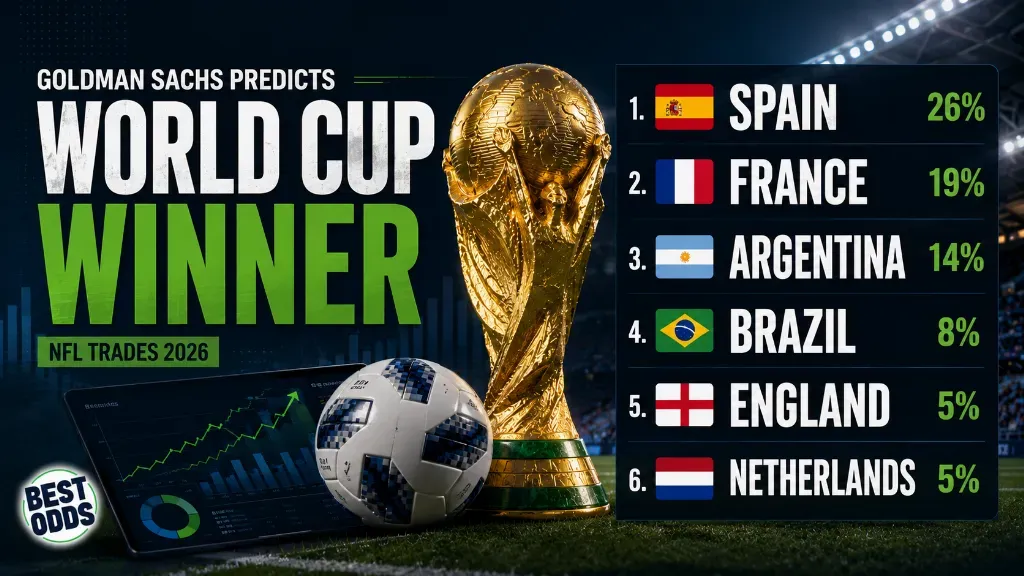
According to Goldman Sachs’ model, Spain enters the tournament with the highest probability of winning the World Cup at 26%. Here’s a look at all the favorites:
- Spain: 26%
- France: 19%
- Argentina: 14%
- Brazil: 8%
- England: 5%
- Netherlands: Approximately 5%
The bank’s model relies heavily on Elo ratings, a ranking system that measures team strength based on match results and opponent quality. Goldman analysts also factored in scoring talent, historical tournament performance, and geographic considerations that could influence results throughout the month-long competition.
While sportsbooks and prediction markets generally view Spain and France among the favorites, Goldman places a higher probability on Spain than many betting markets currently imply.
The Rise of Prediction Markets
One of the most notable developments surrounding the World Cup has been the growth of prediction markets. Unlike traditional sportsbooks, prediction markets allow users to buy and sell contracts tied to future outcomes, with prices fluctuating as new information enters the market.
Platforms such as Kalshi and Polymarket now offer extensive World Cup markets covering:
- Tournament winner
- Group winners
- Match outcomes
- Golden Boot winner
- Host nation performance
- Advancement markets
- Team-specific propositions
Goldman projects host nations to have varying advancement chances, including Mexico (68%), Canada (50%), and the United States (39%) to reach the Round of 16.
CNN noted that Goldman compared its own forecasts against prediction market pricing, reflecting how these platforms are increasingly being viewed as alternative forecasting tools.
The growth has been dramatic. Industry estimates show hundreds of millions of dollars have already been traded on World Cup-related contracts before the opening match, while overall prediction market volume has surged over the past year.
What Role Could Prediction Markets Play During the World Cup?
Prediction markets are expected to become one of the major storylines of the 2026 tournament, particularly in North America where the World Cup will be hosted by the United States, Canada, and Mexico.
Unlike traditional futures wagers that remain static after placement, prediction market participants can actively trade positions throughout the tournament as teams advance or suffer setbacks. This creates a dynamic marketplace that often reacts immediately to injuries, results, lineup changes, and betting sentiment.
Many analysts believe the World Cup could become the largest sporting event yet for prediction market participation, potentially serving as a major customer-acquisition event ahead of the NFL season.
Now an experienced iGaming and sports betting writer and editor, Alex has been a keen casino player and sports bettor for many years, having dabbled in both for personal entertainment. He regularly plays slots, and places bets on his favourite sports, including football and NFL as a preference; he’s a big fan of Chelsea and the New York Giants for all his sins.
Related News

Betting offers


