UFC Betting in the US: A Full Guide
[provider-comparison section=sport]

UFC betting represents one of the most volatile and analytically demanding wagering markets available to US bettors. Unlike team sports where variance is distributed across multiple players and possessions, mixed martial arts contests are defined by individual matchups, stylistic asymmetries, and abrupt fight-ending events. A single strike, submission, or positional error can instantly invalidate pre-fight projections.
For regulated US sportsbooks, UFC events, particularly numbered pay-per-view cards, generate significant handle. High-profile main events attract global betting liquidity, while preliminary fights often display wider pricing inefficiencies. Understanding the structural mechanics of MMA competition is therefore essential before evaluating betting markets.
This guide provides a comprehensive analysis of UFC betting from a US perspective, including core markets, advanced statistical modeling, stylistic breakdown, live betting dynamics, sportsbook comparison, bankroll management, and frequently asked questions.

Understanding the Structure of UFC Events
UFC events are typically divided into preliminary bouts and a main card. Fights are scheduled for either three rounds (non-title bouts) or five rounds (title fights and select main events). Each round lasts five minutes.
Victory can occur via:
- Knockout (KO)
- Technical knockout (TKO)
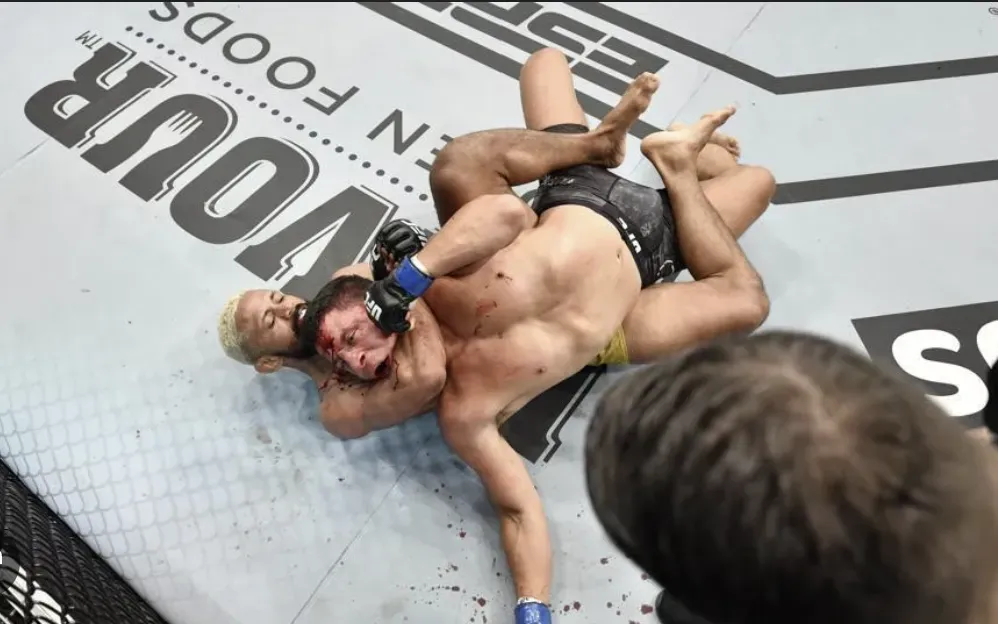
- Submission
- Judges’ decision
- Disqualification
The possibility of abrupt termination introduces structural variance not present in sports governed by fixed scoring clocks.
Five-round fights significantly alter cardio modeling and durability projection. Fighters accustomed to three-round pacing may exhibit measurable output decline in championship rounds. Conversely, fighters with sustained cardio advantages often gain edge as fights extend.
Weight classes further influence dynamics. Lower weight divisions historically produce higher strike volume but lower knockout frequency. Heavier divisions exhibit elevated knockout probability but reduced overall output consistency.
Core UFC Betting Markets
UFC betting markets extend beyond simple winner prediction. Sportsbooks provide layered exposure options that allow granular probability assessment.
Moneyline
The moneyline market determines the fight winner regardless of method. Favorites and underdogs are priced based on implied probability. Because MMA outcomes are binary, moneylines are often sharper than team sports markets.
Heavy favorites occasionally approach -400 or beyond, particularly when stylistic mismatches are pronounced. However, the inherent unpredictability of MMA warrants caution in laying large prices.
Method of Victory
Method markets allow bettors to select:
- Fighter A by KO/TKO
- Fighter A by submission
- Fighter A by decision
- Fighter B by KO/TKO
- Fighter B by submission
- Fighter B by decision
These markets require stylistic evaluation. A striker facing an opponent with weak takedown defense may present submission vulnerability if grappling transitions occur.
Method markets often carry higher margin than moneylines but can offer value when stylistic mismatches are clear.
Over/Under Rounds
Totals markets are typically expressed as Over/Under 2.5 rounds in three-round fights and 3.5 rounds in five-round bouts.
These markets require assessment of finishing probability versus durability and defensive discipline. Fighters with historically low defensive strike absorption may inflate under pricing.
Round Betting
Round betting predicts the exact round in which a fight ends. Because variance is high, these markets produce elevated payouts but require precise timing projection.
Fight to Go the Distance
This market predicts whether the fight reaches the judges’ scorecards. In lower weight divisions with high output but lower finishing power, “Yes” often carries strong probability.
Advanced Fight Analysis in UFC Betting
Surface statistics such as win-loss records are insufficient for projecting MMA outcomes. Advanced modeling requires integration of multiple fight-specific variables.
Striking Differential
Significant strikes landed per minute minus significant strikes absorbed per minute provides insight into striking efficiency. However, raw differential must be contextualized by opponent quality.
A fighter dominating lower-tier competition may appear statistically superior but struggle against elite opposition with superior defensive movement.
Takedown Accuracy and Defense
Grappling asymmetry frequently determines fight outcome. Takedown accuracy percentage combined with opponent takedown defense percentage helps forecast control potential.
Control time often correlates strongly with judges’ decisions. Fighters capable of sustained top control reduce variance by limiting striking exchanges.
Cardio Decay
Output metrics across rounds reveal cardio sustainability. Fighters exhibiting significant drop-off between Round 1 and Round 3 are vulnerable in extended contests.
Five-round fights magnify cardio disparities. Historical data often reveals distinct performance decline in championship rounds for certain athletes.
Weight Cuts
Extreme weight cuts can impact durability and stamina. Fighters moving up in weight class may gain cardio resilience but sacrifice power differential.
Public betting behavior often underestimates weight cut impact until visible during weigh-ins.
Age and Mileage
MMA careers impose physical wear. Fighters beyond certain age thresholds in lighter divisions frequently experience decline in reaction speed. Heavyweight divisions age differently due to power emphasis over speed.
Integrating age-adjusted output metrics refines probability projection.
How US Sportsbooks Price UFC Fights
UFC pricing integrates quantitative metrics and qualitative matchup evaluation. Because MMA is a one-on-one sport, stylistic asymmetry plays a greater role than aggregate team efficiency metrics.
Public perception strongly influences pricing in high-profile bouts. Fighters with promotional backing or highlight-reel knockouts attract disproportionate betting volume. This can occasionally inflate favorite pricing.
Preliminary fights often display wider inefficiencies due to lower liquidity and limited public familiarity. Line movement frequently follows sharp early action before public money enters closer to fight time.
Live betting markets update between rounds based on perceived scoring and visible damage. Because judges’ scoring criteria may differ from broadcast commentary narratives, independent evaluation remains essential.
Best US Sportsbooks for UFC Betting
DraftKings offers deep UFC coverage including moneylines, method props, round betting, and same-fight parlays. Live betting infrastructure is strong for pay-per-view events.

[provider-bonusbox operator=”453″ section=”sport”]
FanDuel provides competitive pricing and clear fight-specific prop menus.

[provider-bonusbox operator=”451″ section=”sport”]
BetMGM Sportsbook lists robust method and round markets, particularly for main-card fights.

[provider-bonusbox operator=”832″ section=”sport”]
Caesars Sportsbook frequently offers promotional boosts on main-event fights.

[provider-bonusbox operator=”70″ section=”sport”]
bet365 Sportsbook, where licensed, provides extensive in-play betting options between rounds.

[provider-bonusbox operator=”2″ section=”sport”]
Operator selection should emphasize pricing consistency and live market reliability.
Stylistic Matchups and Fight-Specific Modeling
In UFC betting, stylistic interaction often outweighs overall record or headline statistics. Two fighters with identical win-loss records may present dramatically different probability distributions based on skill intersection.
Striker vs Wrestler Dynamics
One of the most common matchup archetypes involves a high-volume striker facing a pressure wrestler. Raw striking differential may favor the striker, but if takedown defense percentage is weak, ground control may neutralize output entirely.
Evaluating takedown attempts per fifteen minutes in conjunction with opponent takedown defense is essential. Fighters averaging multiple takedowns per round against opponents with sub-60 percent defense often convert control time into either decision wins or submission threats.
However, defensive grappling skill must also be assessed. Some fighters concede early takedowns but excel at scrambling back to standing position, negating sustained control.
Markets occasionally overprice dominant wrestlers if opponents possess elite submission defense or improved sprawl mechanics in recent fights.
Power vs Volume
Knockout power introduces abrupt termination risk. Heavyweight and light heavyweight divisions exhibit elevated knockout rates relative to flyweight or bantamweight.
However, volume strikers who maintain consistent output can win rounds decisively without requiring finishing power. Judges reward effective striking and control rather than raw aggression.
In fights where one athlete relies heavily on knockout power but absorbs significant strikes, totals markets may understate decision probability if the opponent demonstrates high durability.
Southpaw vs Orthodox Matchups
Stance asymmetry influences striking lanes and defensive angles. Southpaw fighters often create challenges for orthodox opponents unfamiliar with mirrored foot positioning.
Historical performance against opposite-stance fighters provides insight into adaptability. Markets sometimes underweight stance familiarity, particularly when stylistic exposure is limited.
Reach and Range Control
Reach advantage alone does not guarantee striking superiority. Fighters capable of effective range management exploit reach more efficiently than those who struggle with footwork discipline.
Evaluating significant strikes landed at distance versus in-clinch exchanges refines modeling.
Live Betting Strategy Between Rounds
Live UFC betting differs from continuous in-play wagering in team sports. Sportsbooks typically suspend markets during rounds and reopen between rounds based on perceived scoring, visible damage, and momentum.
Because judges’ scoring criteria emphasize effective striking, grappling control, and octagon control rather than superficial aggression, broadcast commentary may not always reflect actual round scoring.
Between-round betting opportunities often arise when:
- A fighter appears visually dominant but absorbed fewer effective strikes
- A takedown-heavy round was closer than crowd reaction suggests
- A fighter with known cardio advantage begins increasing pace
Totals markets may also shift aggressively after an explosive first round. If early finishing attempts fail and cardio decay becomes apparent, over-round value may emerge for durable fighters.
However, live betting carries inherent volatility. Because a single strike can abruptly end the fight, position sizing must reflect heightened risk.
UFC Parlays and Same-Fight Parlay Risk
Parlay betting is common in UFC due to event-based structure. Multiple fights occur on a single card, encouraging combination exposure.
However, MMA volatility magnifies parlay risk. Upsets occur with higher frequency than in many team sports due to individual matchups and small-sample variance.
Multi-Fight Parlays
Combining multiple heavy favorites may appear conservative but compounds variance. Even fighters priced at -400 carry implied loss probability. Stringing together three such favorites introduces cumulative upset exposure.
Long-term profitability requires evaluating correlated assumptions. For example, selecting multiple fighters based on presumed judging bias toward aggression may fail if officiating emphasis shifts.
Same-Fight Parlays
Same-fight parlays allow combination of moneyline with method or round markets. Correlation adjustments are embedded into pricing, often increasing margin relative to straight bets.
For example, pairing Fighter A to win with Under 2.5 rounds reflects correlated probability. Sportsbooks adjust price downward to account for correlation.
While same-fight parlays can produce elevated returns, understanding embedded margin is critical before placement.
Bankroll Architecture for UFC Betting
UFC betting volatility necessitates disciplined bankroll structure.
Unit-based staking should remain consistent across events. Main-event fights attract disproportionate attention, but exposure should not exceed predefined limits due to emotional investment.
Because fight cards occur weekly or biweekly, overexposure across multiple events can compound losses. Establishing maximum event-level exposure prevents chasing behavior following unexpected upsets.
Futures markets, such as divisional championship outcomes, require small proportional allocation due to extended time horizon and injury risk.
Licensed US sportsbooks provide deposit limits and responsible gaming safeguards. Utilizing these tools supports long-term sustainability.
UFC Betting Resources
Best Sportsbooks for UFC Betting
The best sportsbooks for UFC betting provide comprehensive fight markets and consistent odds across every card. Leading platforms such as DraftKings, FanDuel, BetMGM, and Caesars offer wagers on winners, methods of victory, and round totals, along with reliable live betting between rounds. Expanded prop markets, like fight duration and specific finish outcomes, give bettors additional ways to approach each matchup.
UFC Betting Bonuses
UFC betting bonuses at leading sportsbooks such as FanDuel, DraftKings, and BetMGM typically include bet-and-get offers, deposit matches, and risk-free wagers tied to major fight cards. These promotions allow bettors to receive bonus credits after placing qualifying bets, which can be used across fight lines, method-of-victory props, and round betting markets. For UFC bettors, these bonuses add value and flexibility, especially during high-profile pay-per-view events.
Where to Bet on UFC Fights
Top options for where to bet on UFC fights include FanDuel, DraftKings, and BetMGM, all of which offer competitive odds and extensive markets on every fight card. These sportsbooks provide a wide range of betting options, including fight lines, method-of-victory props, round betting, and live wagering throughout the event.
Step-by-Step Guide to Placing a UFC Bet Online
Step 1: Register with a Licensed Sportsbook
Select a state-authorized sportsbook such as DraftKings, FanDuel, BetMGM, Caesars, or bet365 where available. Complete identity verification and geolocation confirmation.
Step 2: Deposit Funds
Access the cashier section and deposit via ACH, debit card, or approved digital wallet depending on state availability.
Step 3: Navigate to UFC Markets
Select the MMA or UFC category. Choose the specific fight card and open the desired matchup.
Step 4: Select Market
Choose moneyline, method of victory, round betting, totals, or same-fight parlay options. Enter stake and confirm bet.
Step 5: Monitor Live Between Rounds
Live markets reopen between rounds. Evaluate independent scoring rather than relying solely on broadcast narrative.
Step 6: Withdraw Winnings
After settlement, access the cashier section to request withdrawal. Processing time varies by method.
Responsible Gambling
Sports betting should be treated as entertainment rather than a source of income. All licensed US sportsbooks are required to provide deposit limits, wager limits, session time controls, and self-exclusion tools through account settings. These tools are most effective when configured before a fight card begins rather than in response to losses already sustained.
For confidential support, contact the National Problem Gambling Helpline at 1-800-GAMBLER, available 24 hours a day, seven days a week. Additional responsible gambling resources are available through the National Council on Problem Gambling.
Final Perspective on UFC Betting
UFC betting presents one of the most dynamic and variance-driven markets within regulated US sportsbooks. Individual matchup asymmetry, abrupt fight-ending potential, and evolving stylistic interaction create probability distributions distinct from team sports.
Success requires granular analysis of striking differential, grappling efficiency, cardio sustainability, weight-cut impact, and stylistic compatibility. Public perception often inflates promotional favorites, while preliminary bouts may offer wider pricing inefficiencies.
Within the regulated framework, disciplined bankroll management and probability-based evaluation transform UFC betting from spectacle-driven speculation into structured analytical engagement.
Frequently Asked Questions About UFC Betting
Is UFC betting legal in the United States?
Yes. It is legal in states that authorize regulated sports wagering.
Are UFC betting winnings taxable?
Yes. Gambling winnings are subject to federal and potentially state taxation.
Do favorites win most UFC fights?
Favorites win more often than underdogs, but upset frequency remains significant due to stylistic volatility.
Is live betting profitable in UFC?
Profitability depends on disciplined round-by-round evaluation rather than reactive momentum bias.
Are same-fight parlays good value?
They may offer high returns but incorporate correlation-adjusted pricing that increases embedded margin.
UK iGaming Writer - With 10+ years in tech, crypto, igaming, and finance, Ali has written across many platforms covering crypto, tech, and gambling news, reviews, and guides. He specialises in content on igaming, sports betting, and crypto trends in emerging markets. Outside of work, Ali enjoys cricket and travelling.