
UFC Odds


As a result, UFC odds are not linear expressions of superiority but probabilistic models designed to account for multiple independent paths to victory and defeat.
Understanding UFC odds requires abandoning assumptions carried over from football, tennis, or boxing. There is no accumulation of advantage over time, no protection through possession or defence systems, and no guarantee that the better fighter will prevail across a longer sample. Every second of a UFC bout carries existential risk, and odds reflect that reality.
This guide explains how UFC odds are formed, how to interpret them correctly, how markets behave before and during fights, and how bettors should approach pricing without falling into the most common analytical traps.
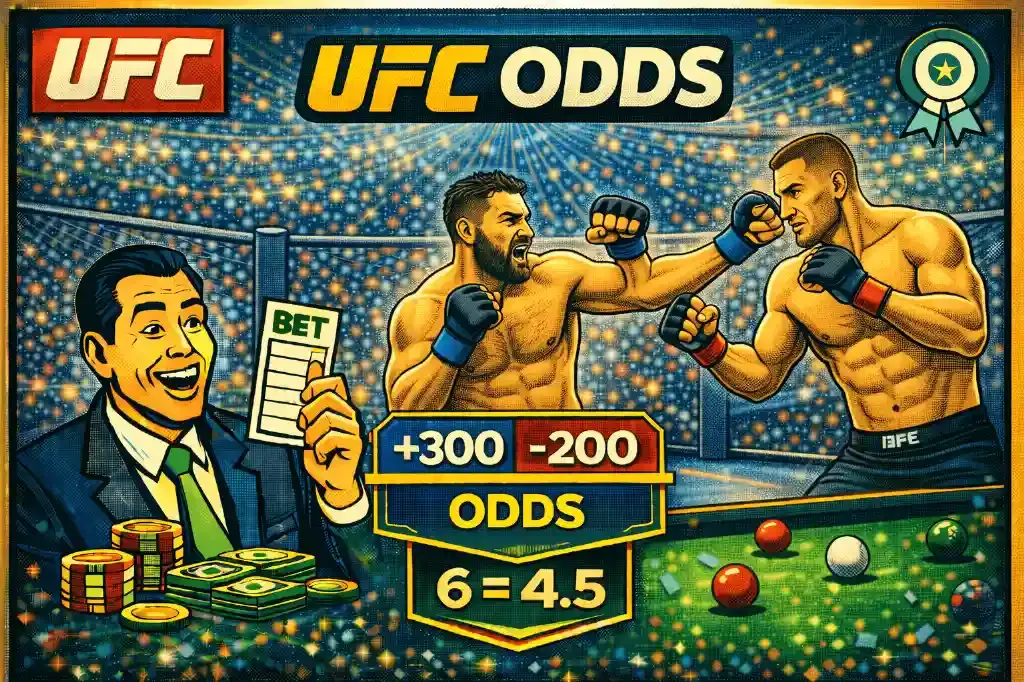
The Structural Nature of UFC Odds
At their core, UFC odds represent risk aggregation rather than performance expectation. A bookmaker is not asking which fighter looks better on paper. They are asking how many viable ways each fighter has to lose.
In a typical UFC fight, loss mechanisms include knockouts, submissions, referee stoppages, accumulated damage, and tactical exhaustion. Each of these outcomes has its own probability curve, and UFC odds compress all of them into a single price.
This is why even dominant fighters are rarely priced as certainties. A fighter may be technically superior in every phase of combat, but if they remain exposed to one credible finishing threat, that exposure must be priced into the odds.
Why UFC Odds Appear “Wrong” to Casual Bettors
Many casual bettors perceive UFC odds as inefficient because favourites lose more frequently than expected. This perception stems from a misunderstanding of implied probability rather than bookmaker error.
A fighter priced at 1.40 implies a win probability of roughly 71 percent. In a low-variance sport, this might be conservative. In MMA, where a single punch or scramble can end the fight, that probability may already be optimistic unless the fighter demonstrates exceptional defensive completeness.
UFC odds look unstable because the sport itself is unstable. Once this is understood, the pricing begins to make sense.
How Bookmakers Build UFC Odds
Bookmakers construct UFC odds by modelling conditional probabilities across multiple dimensions. These include:
- Likelihood of early fight-ending sequences
- Defensive reliability under pressure
- Cardio sustainability
- Ability to recover from damage
- Style interaction between fighters
- Weight class volatility
These inputs are weighted differently depending on the matchup. A heavyweight bout carries a higher knockout baseline than a flyweight contest. A striker versus grappler matchup introduces asymmetric risk that cannot be averaged evenly.
UFC odds therefore reflect scenario-based modelling, not win-loss records or highlight reels.
Implied Probability and UFC Pricing
Implied probability is the most important concept in UFC odds analysis. Because of high variance, small pricing differences represent meaningful changes in expected outcome.
For example, the difference between odds of 1.80 and 1.60 may appear minor, but it reflects a shift from approximately 56 percent to 62.5 percent implied probability. In a sport with multiple instant-loss scenarios, that gap is significant.
Bettors should constantly ask whether the offered price truly compensates for all plausible loss paths. If a fighter can lose quickly via multiple mechanisms, their odds should remain longer, regardless of perceived dominance.
Moneyline Odds in the UFC
Moneyline odds are the most common UFC market and the least understood. These odds bundle every possible win condition into a single price, masking how narrow or broad a fighter’s path to victory may be.
A fighter with strong wrestling but poor striking defence may be favoured on the moneyline, yet their true probability depends heavily on securing takedowns early. If that condition is not met, the fight may swing rapidly.
Moneyline odds are most reliable when backing fighters with defensive completeness. This includes strong takedown defence, composure under pressure, and the ability to survive adverse phases.
Why Records and Rankings Mislead UFC Odds Interpretation
Win-loss records and rankings are poor predictors of betting value in UFC markets. They fail to capture stylistic context, opponent quality, and the manner in which victories were achieved.
A fighter with an impressive record built against limited opposition may be overpriced when stepping up in competition. Conversely, a fighter with recent losses against elite opponents may be undervalued when facing a stylistically favourable matchup.
UFC odds often incorporate this nuance better than public perception does, leading to apparent “surprises” that are not surprising from a probabilistic standpoint.
Method of Victory Odds
Method of victory odds allow bettors to isolate specific outcomes such as knockout, submission, or decision. These markets provide insight into how bookmakers view each fighter’s most likely path to success.
They are particularly useful when a fighter’s win condition is narrow. For example, a grappler with limited striking ability may realistically win only via submission. In such cases, the submission price may offer better value than the moneyline.
However, method markets also carry additional risk. Predicting not just the winner but the exact mechanism requires strong conviction and precise analysis.
Round and Time-Based Odds
Round betting and time-based odds attempt to pinpoint when a fight will end. These markets are among the most volatile in UFC betting because they depend on precise sequencing of events.
While some fighters exhibit consistent early or late finishing tendencies, many factors can disrupt timing, including referee intervention, opponent durability, and tactical shifts.
These markets should be treated as high-risk expressions of confidence rather than core betting tools.
Totals Odds in UFC Fights
Totals odds involve betting on whether a fight will exceed or fall short of a specified duration. These markets are influenced by finishing ability, defensive competence, pacing, and weight class.
Lower weight classes tend to produce longer fights due to reduced knockout power, while heavier divisions exhibit greater volatility. However, individual matchups can override these trends.
Totals odds are particularly useful when both fighters demonstrate strong defence but limited finishing output.
Style Interaction and Odds Mispricing
Style interaction is the single most important factor in UFC odds interpretation. A fighter’s strengths only matter insofar as they can be imposed on the opponent.
Striker versus grappler matchups hinge on takedown defence and clinch control. Grappler versus grappler bouts may devolve into striking exchanges. Striker versus striker contests depend on footwork, reach, and defensive discipline.
Markets sometimes underprice style mismatches when rankings suggest parity. Bettors who understand these interactions can identify value where surface metrics fail.
Weight Classes and Volatility
Weight class plays a decisive role in UFC odds behaviour. Heavyweight fights carry inherently higher variance due to knockout power, while lighter divisions reward technical consistency and cardio.
Backing short-priced favourites in heavyweight bouts is structurally riskier than doing so in flyweight or bantamweight contests. Odds often reflect this through compressed pricing across the division.
Understanding weight-class volatility helps bettors calibrate risk more accurately.
Live UFC Odds and Market Overreaction
Live odds in UFC fights respond aggressively to visible momentum. Early takedowns, knockdowns, or dominant positions can cause sharp price swings.
However, live markets frequently overreact to control without threat. A fighter may dominate positionally without inflicting damage or threatening finishes, yet see their odds shorten dramatically.
Effective live odds interpretation requires distinguishing between positional control and genuine finishing danger.
Short-Notice Fights and Odds Adjustment
Short-notice replacements are common in the UFC and significantly impact odds. Markets often assume reduced preparation equals reduced probability, but this is not universally true.
Fighters who train year-round, accept fights frequently, or match up stylistically may perform well despite limited preparation. Conversely, fighters who rely on complex game plans may struggle even with full camps.
Odds often overreact to short-notice narratives, creating mispricing opportunities.
UFC Betting Within an Odds-Driven Framework
UFC betting should be approached as an exercise in probability interpretation rather than prediction. Odds represent risk assessments, not forecasts of dominance.
Effective UFC betting aligns selection with pricing inefficiencies rather than emotional conviction. This means passing on fights where odds reflect true risk and engaging selectively where mispricing occurs.
Moneyline betting, prop markets, and live betting all serve different analytical purposes. The key is understanding what each market expresses and whether it aligns with the bettor’s view of the fight.
Advanced UFC Odds Movement and Market Behaviour
UFC odds rarely remain static once a fight is announced. Early prices often reflect broad expectations based on rankings, records, and public perception, but these initial numbers are only a starting point. As information accumulates, markets adjust to incorporate factors such as stylistic analysis, training camp reports, short-notice changes, and betting volume.
Early movement is frequently driven by professional bettors identifying mispriced risk rather than new information becoming available. These adjustments tend to be gradual and logical. Later movement, particularly in the final forty-eight hours before a fight, is more likely to be influenced by public money, weigh-in narratives, or speculation. Understanding the difference between informed movement and sentiment-driven movement is essential when interpreting UFC odds.
Sharp movement often reflects structural insights, such as a grappling advantage being undervalued or a defensive weakness being exposed. Public-driven movement, by contrast, tends to exaggerate recent highlights, physique at weigh-ins, or promotional narratives.
Steam, Drift, and False Signals
Not all odds movement carries predictive value. Steam, defined as rapid odds shortening across multiple bookmakers, can indicate strong professional interest, but it can also be the result of coordinated public betting on high-profile fighters.
Drift, where odds lengthen noticeably, is often interpreted as negative information. However, fighters sometimes drift simply because attention shifts elsewhere on the card or because early money favours the opponent without fundamentally changing fight dynamics.
Effective odds interpretation involves assessing whether movement aligns with structural change. If nothing about the matchup has materially altered, dramatic movement may represent opportunity rather than warning.
The Role of Public Bias in UFC Odds
Public bias plays a significant role in UFC pricing, particularly for fighters with recognisable names, highlight-reel finishes, or promotional backing. These fighters often attract disproportionate betting interest, pushing their odds shorter than justified by objective analysis.
Conversely, technically sound but less charismatic fighters may be undervalued, especially if their style lacks visual excitement. Markets must balance bookmaker liability against true probability, and public bias often skews that balance.
Recognising when odds reflect popularity rather than probability is a key skill in UFC betting.
Betting Heavy Favourites and Structural Risk
Heavy favourites exist in UFC betting, but they are inherently fragile positions. Even when one fighter appears superior in most aspects, the sport’s volatility ensures that downside risk remains.
Heavy favourites are most justifiable when a fighter demonstrates defensive completeness, including reliable takedown defence, composure under pressure, and minimal exposure to sudden finishes. Fighters who rely on aggression or early finishes are rarely suitable heavy favourites, regardless of reputation.
Bettors should treat short odds with scepticism unless the favourite’s loss mechanisms are convincingly limited.
Underdogs, Price Length, and Realistic Win Paths
Underdogs in UFC betting often appear overpriced or underpriced depending on how their win conditions are perceived. An underdog with a single, narrow path to victory may still justify a short price if that path is realistically achievable.
Conversely, underdogs with multiple but low-probability win paths may remain long-priced despite appearing competitive. Evaluating underdog odds requires assessing not just whether an upset is possible, but whether it is repeatable under fight conditions.
Underdog betting becomes most effective when the market underestimates stylistic leverage or overestimates the favourite’s defensive reliability.
Live Odds Revisited: Control Versus Threat
Live UFC odds continue to be one of the most misunderstood markets. Odds often shorten dramatically for fighters who secure takedowns or dominate positionally, even if they pose little finishing threat.
Effective live betting focuses on identifying whether a fighter is creating credible danger. Control without threat may win rounds, but it does not necessarily increase the likelihood of a finish. Conversely, a fighter absorbing control but landing damaging strikes or threatening submissions may be undervalued.
Live markets frequently misprice these dynamics, particularly in the first round.
Judging Criteria and Decision-Based Odds
Judging criteria influence UFC odds more subtly than in boxing, but they still matter. Control time, damage, and octagon positioning all factor into decision outcomes.
Fighters who rely heavily on control without damage may win rounds narrowly, but they also risk losing close decisions if judges favour visible striking. Markets sometimes misinterpret how judges apply criteria, particularly in closely contested bouts.
Understanding judging tendencies helps contextualise decision odds and late-round live pricing.
UFC Betting as a Subset of Odds Interpretation
UFC betting is inseparable from odds interpretation. Betting success depends not on predicting outcomes, but on identifying when odds fail to reflect true risk distribution.
Moneyline betting is most appropriate when one fighter has multiple viable paths to victory and limited exposure to catastrophic loss. Method and totals markets allow for more precise expressions of expected fight flow but require higher analytical confidence.
Live betting offers opportunity when markets overreact, but it demands emotional control and rapid assessment.
Across all markets, selectivity remains paramount. The UFC schedule offers volume, but volume does not equal value.
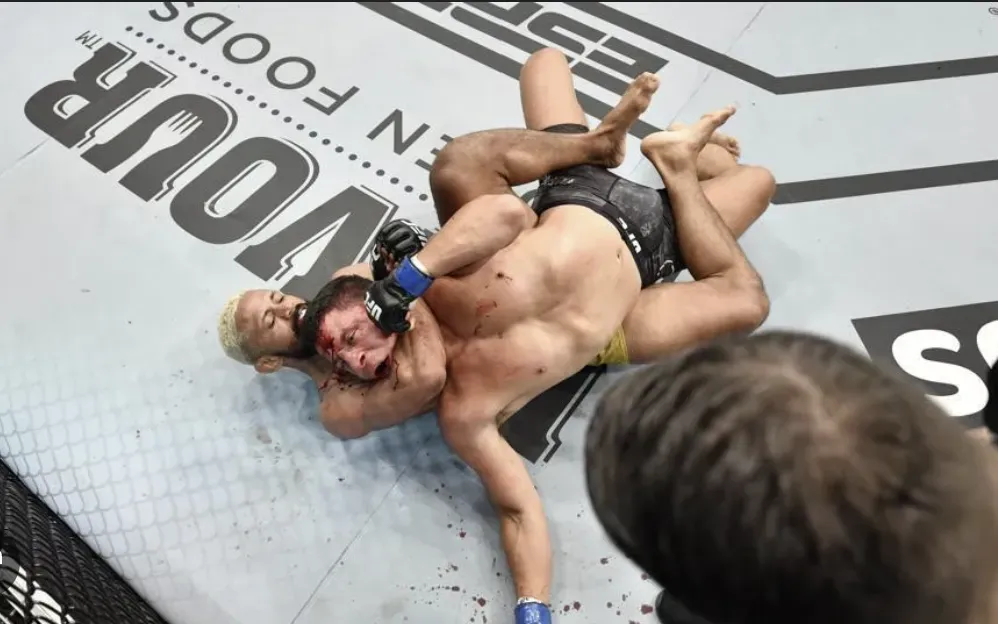
Common Odds Misinterpretation Errors
One common error is assuming that dominant early performance guarantees victory. UFC fights frequently swing based on fatigue, mistakes, or opportunistic finishes.
Another mistake is conflating physical appearance with readiness. Muscular physiques at weigh-ins often excite public bettors but have little correlation with performance.
Finally, bettors often misread odds shortening as confirmation rather than opportunity. Movement does not always imply correctness.
Final Perspective on UFC Odds
UFC odds are expressions of uncertainty, not forecasts of certainty. They reflect a sport where risk is omnipresent and outcomes are often decided by moments rather than margins.
Understanding UFC odds requires probabilistic thinking, structural analysis, and emotional discipline. Bettors who approach pricing analytically rather than narratively are better positioned to identify value over time.
Key Takeaways for UFC Odds
- UFC odds aggregate multiple independent loss mechanisms
- Short odds require exceptional defensive completeness
- Style interaction outweighs records and rankings
- Public bias often distorts pricing on popular fighters
- Live odds frequently overreact to control without threat
- Heavy favourites carry structural fragility
- Selectivity and discipline underpin long-term success
Frequently Asked Questions – UFC Odds
What do UFC odds actually represent?
UFC odds represent a bookmaker’s assessment of aggregate risk, not simple superiority. They compress multiple independent loss mechanisms into a single price, including knockouts, submissions, referee stoppages, cardio collapse, and tactical errors. Unlike many sports, UFC odds are designed to price uncertainty rather than gradual performance.
Why do UFC favourites lose more often than favourites in other sports?
Because UFC fights carry instant fight-ending volatility. Even a dominant fighter remains exposed to a single strike or scramble. Short odds do not imply safety; they imply that a fighter has fewer viable ways to lose, not that losing is unlikely.
How should I interpret implied probability in UFC betting?
Implied probability shows how often a fighter would need to win for the odds to be fair. In UFC betting, bettors must judge whether that probability realistically accounts for all loss scenarios. If a fighter can lose quickly in multiple ways, short odds may overstate their true chance.
Why do UFC odds move so much before fights?
Odds move due to a mix of professional betting activity, public sentiment, short-notice changes, weigh-in narratives, and market liability. Early movement often reflects informed analysis, while late movement is more frequently driven by public perception or hype.
Are UFC odds more efficient than other sports?
UFC odds are structurally efficient but psychologically volatile. Bookmakers price risk well, but public bias and narrative-driven betting can still create mispricing, especially for popular fighters or dramatic stylistic matchups.
Do records and rankings matter when reading UFC odds?
They matter far less than in other sports. Records and rankings lack stylistic context and do not reflect how wins were achieved. UFC odds are better interpreted through matchup dynamics than résumé strength.
Why are heavyweight UFC odds usually closer?
Heavyweight fights carry higher knockout variance. Because almost every exchange can end the fight, bookmakers compress prices to reflect elevated randomness. This makes heavy favourites particularly fragile in higher weight classes.
What is the difference between moneyline odds and method-of-victory odds?
Moneyline odds price any win, regardless of how it occurs. Method-of-victory odds isolate specific outcomes such as knockout, submission, or decision. Method markets are useful when a fighter’s realistic path to victory is narrow.
Are live UFC odds reliable?
Live odds are reactive and often overreact to visible control, such as takedowns or top position, even when finishing threat is minimal. Bettors should distinguish between positional dominance and genuine fight-ending danger.
How do short-notice fights affect UFC odds?
Markets often assume short notice equals disadvantage, but this is not always true. Stylistic compatibility and baseline readiness matter more than preparation length. Odds frequently overreact to short-notice narratives.
Why do odds sometimes move after weigh-ins?
Late movement can reflect concerns about weight cuts, injuries, or conditioning. However, many weigh-in reactions are cosmetic rather than substantive. Not all late movement signals meaningful information.
Are underdogs generally better value in UFC betting?
Underdogs can offer value when the market underestimates a viable and repeatable win path. However, underdogs with only a single low-probability route to victory may still be correctly priced despite long odds.
Should UFC odds be used in accumulators?
UFC odds are poorly suited to accumulators. The sport’s inherent variance compounds rapidly across multiple selections, dramatically reducing expected value.
Are UFC betting winnings taxed in the UK?
No. Betting winnings are currently tax-free for customers in the United Kingdom when betting with UK-licensed operators.
Now an experienced iGaming and sports betting writer and editor, Alex has been a keen casino player and sports bettor for many years, having dabbled in both for personal entertainment. He regularly plays slots, and places bets on his favourite sports, including football and NFL as a preference; he’s a big fan of Chelsea and the New York Giants for all his sins.